
Your BMI is fine but your waist keeps growing. Watch the tape.
By Maya · November 25, 2026

Denise is 51 and runs the cafeteria at a middle school. She stands on the scale most mornings and gets a number that has barely moved in years. Her doctor says her BMI is fine, technically overweight at 26 but nothing to worry about. The problem is her waist. Six years ago it was 33 inches around. Now it is 38. The scale says she is roughly the same person. The tape measure says something else entirely.
BMI is a blunt tool. It looks at total weight against height and says nothing about where that weight sits. The waist is the number that tracks the fat that sits close to your organs. You tend to see it in your face and waist first: a sharper jawline, less puffiness, a looser waistband. The scale can lag behind what you notice in the mirror.
Denise’s doctor pointed at the waist measurement, not the BMI. He told her to stop weighing herself every day and start measuring her waist once a week instead. Sunday morning, before breakfast, tape at the navel, relaxed stomach, write it down. That number became the one she argued with.
The tape measure tells the truth
A waist measurement is not a mood. The scale swings with water, salt, a late dinner, a hard workout, and the phase of the month. The tape measure moves slowly and in one direction when things are changing. Denise liked that. She could have a bad weekend, step on the scale Monday, and see a number that made no sense. The tape on Sunday did not do that. It reflected what was actually happening to her body over weeks, not what happened last night.
A waist that creeps up year after year is a sign that something is shifting in how your body carries weight. You might notice your clothes fitting differently, or feel less comfortable sitting for long stretches. Denise noticed her energy dipping after lunch and her pants feeling tight by afternoon.
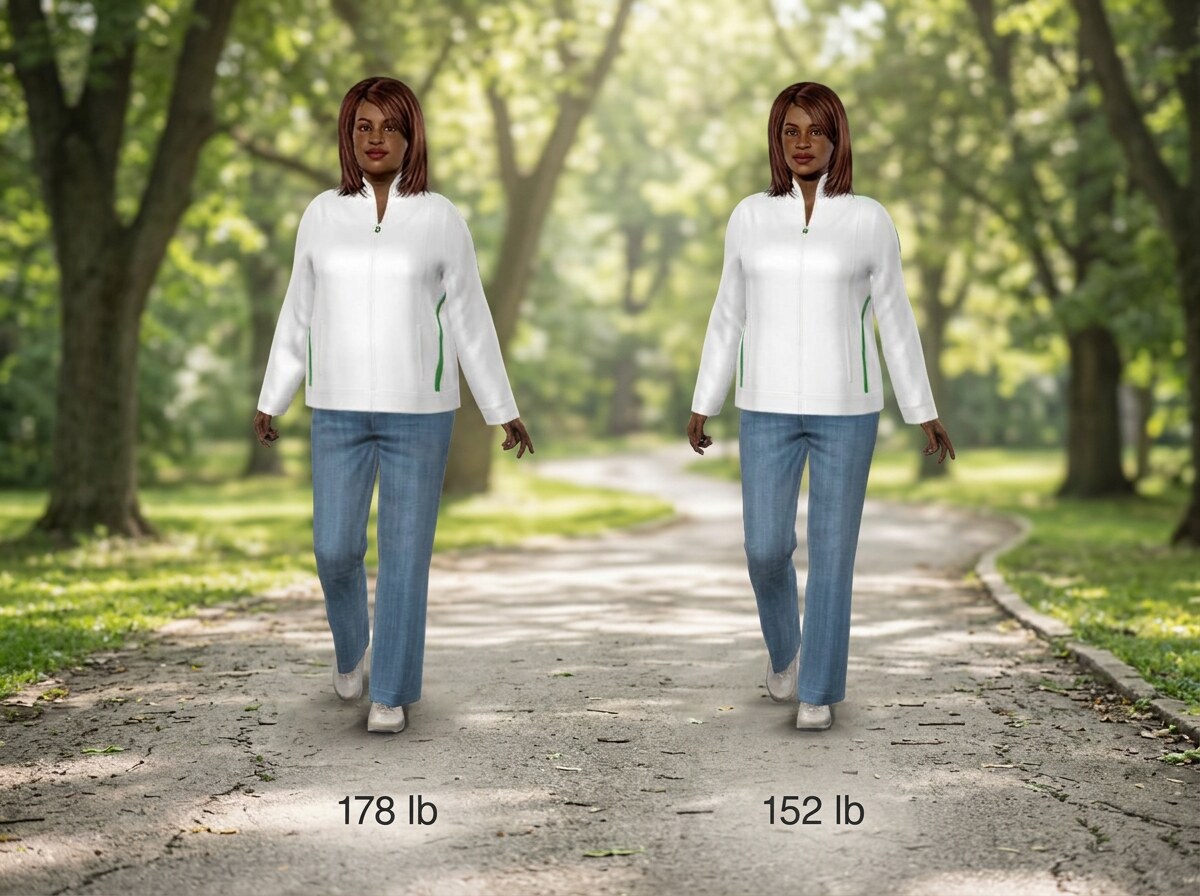
The figure above shows Denise at 178 pounds and at 152 pounds. The difference is not dramatic in the face or the arms. It shows up in the middle. At 178 her waist carries the extra weight, and the render makes that plain. At 152 the waist is visibly smaller, the line of her torso changes, and her clothes would hang differently. That is what a waist-focused effort looks like on a body. The scale number is just a number. The shape is what you see in the mirror and in the way your pants fit.
If you want to see what your own change might look like, take a look at the simulator. You set a height and two weights and see the difference on a body. It helps to look at the render before you start, because the mirror lies to you over time. You stop noticing your own body’s changes. A side-by-side picture gives your eyes something the mirror never will.
One fewer sweetened drink and a walk after dinner
Denise did not overhaul her life. She built her week around two things. The first was one fewer sweetened drink a day. She used to have sweet tea with lunch and a soda in the afternoon. She kept the sweet tea and dropped the soda. That was it. The second thing was a 20-minute walk after dinner, most nights, around the block near her house. Nothing fast, nothing that required a gym. Just a walk before the dishes and the couch.
Those two changes were small enough to survive the school year. A cafeteria manager’s day starts early and involves a lot of standing. By the time she got home, the idea of a workout was not realistic. The walk was. The missing soda was. She did not count calories or follow a named diet. She just made the two changes and let the tape measure be the judge.
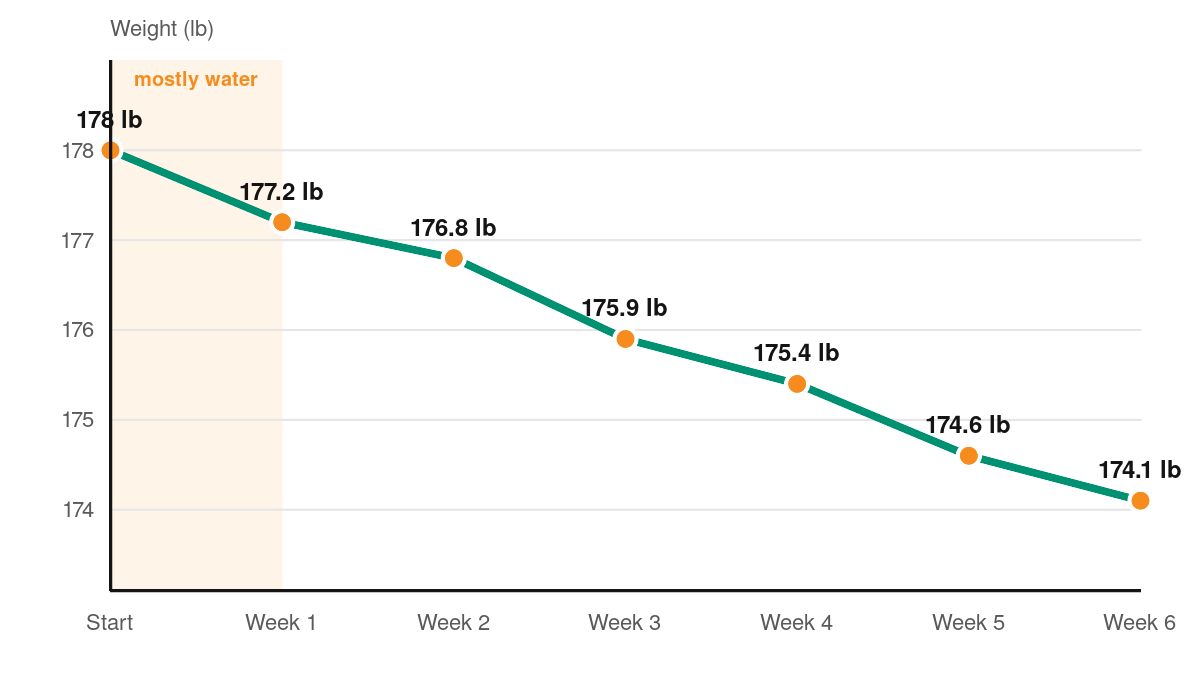
The graph below shows Denise’s first six weeks of scale weights. She started at 178 pounds and the scale moved to 174.1 by week six. That is a little under four pounds in six weeks, which is a perfectly ordinary rate, and the first week’s drop was mostly water. The graph is not a straight line down. Week three barely moved. Week five moved more than expected. That is what a real six weeks looks like. The scale is noisy. The tape measure over that same period was steadier, and it was the number she actually looked forward to writing down.
The Sunday morning ritual
Denise picked Sunday morning because the house was quiet and she could do it before anyone else was up. Tape at the navel, relaxed, not sucking in, not pulling tight. She wrote the number in a small notebook she kept in the bathroom drawer. No apps, no spreadsheets. Just a number and a date.
At first the number did not move much. The first month was frustrating. She had given up the soda and started walking, and her waist was maybe half an inch smaller. The scale had dropped a few pounds but the tape was stubborn. Her doctor had warned her about this. Waist fat goes slowly, especially at 51. The body gives up the easy water weight first, then the fat around the middle takes its time.
By month three the tape started to move. A quarter inch here, a quarter inch there. By five months her waist was down three inches, from 38 to 35. That was the number that matched how she felt: lighter in the afternoons, steadier through the day. The scale was down too, but the waist was the proof that the right thing was changing.
The psychology of the tape measure is different from the psychology of the scale. The scale gives you a new number every day, and every number feels like a verdict. The tape gives you one number a week, and that number is about shape, not weight. Denise stopped having the morning argument with the scale. She had one moment a week, Sunday morning, and the rest of the week she just lived her life.
There is a trap here too. Some people trade scale obsession for tape obsession and measure three times a day, waiting for a change. That misses the point. The tape is slow on purpose. Once a week is enough. The number will not move every week, and that is fine. What you are watching is the trend over months, not the reaction to yesterday’s lunch.
Perceptual adaptation is real. You will not see the three inches in the mirror because you look at yourself every day and your brain adjusts. The tape measure is the outside record that says the change happened. Denise could look back at the notebook and see the numbers going down even when the mirror said nothing had changed. That record is worth keeping.
The thing to do this week is buy a soft tape measure and pick a time. Sunday morning before breakfast, or whatever morning your house is quiet. Measure once, write it down, and put the tape away. Let that be the number you check. The scale can stay in the bathroom for the people who want it, but your waist has a better memory.