
When the GLP-1 prescription ends, your habits stay or they don't
By Maya · November 4, 2026
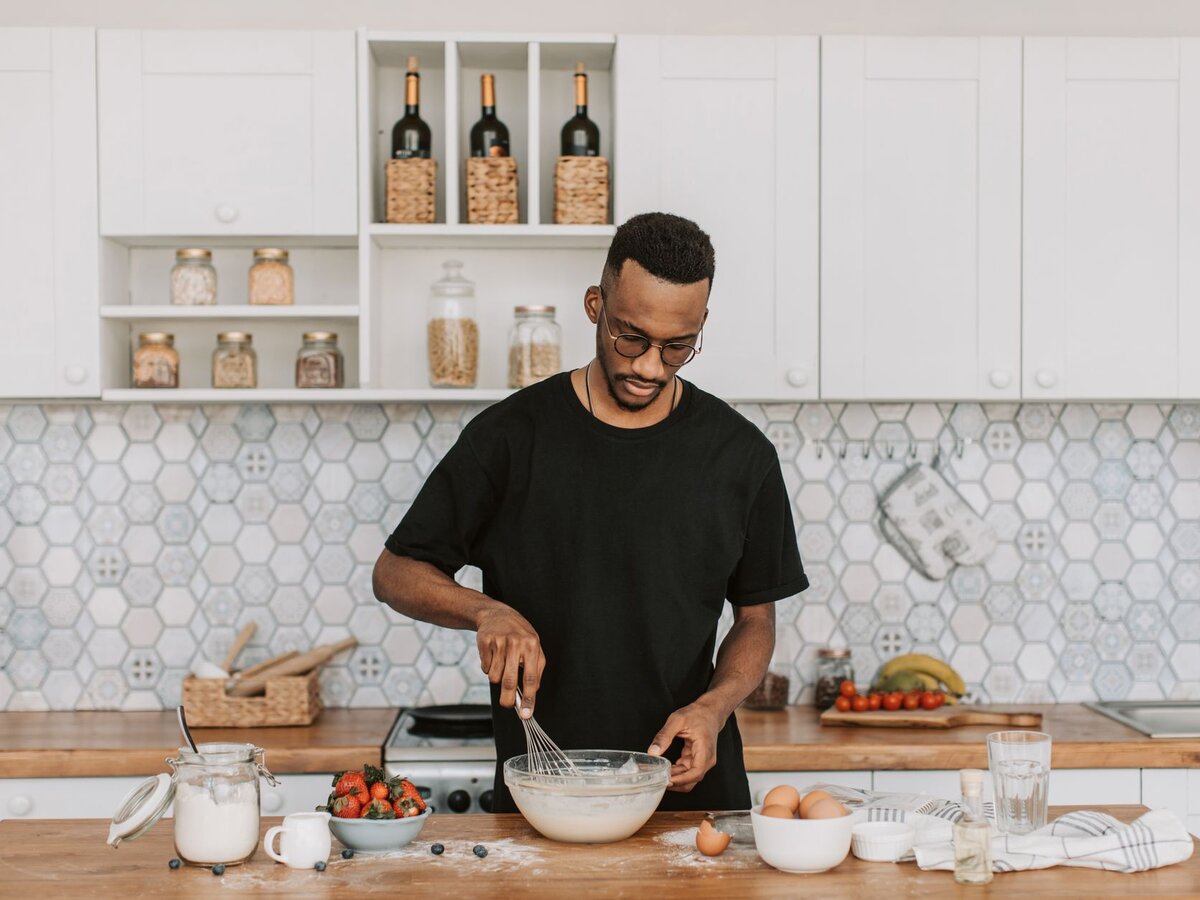
Marcus is 51 and supervises a warehouse floor outside Dayton, Ohio. Two years ago he weighed 278 pounds. He went on a GLP-1, stayed on it for 14 months, and got down to 240. Then his employer switched insurance carriers, the coverage changed, and the prescription stopped. He regained 11 pounds in five months. When I talked to him about it, the part that stuck with me was this: in 14 months on the drug, he never once cooked a meal from scratch. He’d order out, eat half, and let the appetite suppression handle the rest. When the drug left, the half-orders became full orders.
That’s the story behind a lot of the headlines right now. New drugs are beating old ones on the numbers. People are cycling on and off. Some of them are fine. Some of them are Marcus.
A pause button is not a skill
GLP-1s are real medicine and they work for a lot of people.
But a pause gives you a window. What you do in the window is up to you. Marcus spent 14 months in the window eating takeout, just less of it. He didn’t learn what a portion of rice looks like on a plate. He didn’t learn to cook chicken thighs. He didn’t learn what to do on a Tuesday when he got home at 7 and the fridge was empty. The drug made those problems invisible. When it stopped, they came back all at once.
You can build the skills while you’re on the drug. The appetite is quiet, so it’s a good time to practice. Learn three meals you can cook without thinking. Learn what a reasonable plate looks like when you’re not ravenous. Learn to shop for a week on a Sunday. Those are the things that stay when the prescription doesn’t. If you’re on a GLP-1 now, talk to your doctor before you change anything about how you eat or when you stop.
What Marcus is doing now
He’s back at 240, and his goal is 202. That’s a real distance, and he’s not pretending it isn’t. He’s also not going back on the drug right away, because the coverage isn’t there and he’s tired of waiting for it. So he’s doing the thing he should have done the first time: he sat down with his wife and wrote out the meals he actually ate during his best stretch on the drug. The meals he actually ate. Turns out there were three: a chicken-and-rice bowl he got from a place near work, a turkey sandwich he made at home, and a stir-fry his wife made on Sundays that lasted two dinners. Those three meals kept him steady for months. He’d stopped ordering them when the drug stopped, because he’d never learned to make them himself.
Now he’s learning. The chicken bowl is the hardest, because the sauce is the point and he hasn’t nailed it yet. The sandwich is easy. The stir-fry is a Sunday project. He’s trying to have three dinners he can make without thinking, so that the default on a tired Tuesday is something he chose.
Here’s what the first three months look like on the scale. Marcus started at 240 and is working toward 202. The graph below shows his weekly weigh-ins for 13 weeks. The first week dropped a little more than the rest, which is normal, mostly water. Then it settles into a slow, uneven line. Some weeks nothing moves. Some weeks it goes up a bit. That’s what rebuilding habits looks like on a scale.
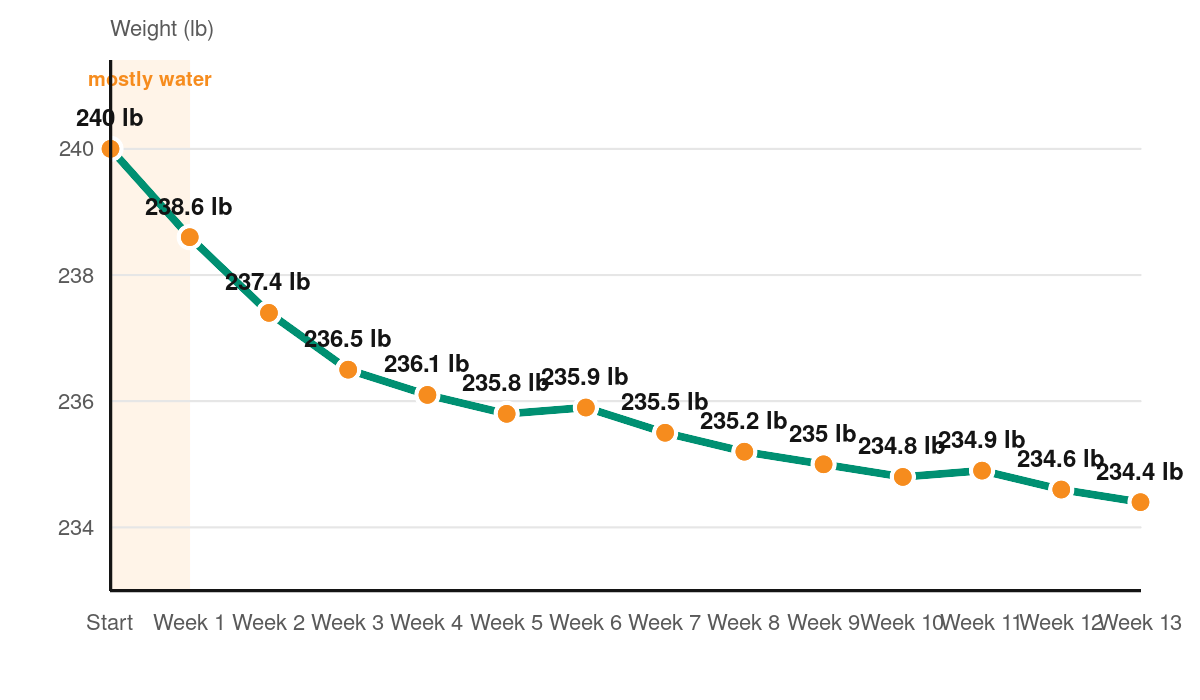
After 13 weeks he’s at 234.4, down about 6 pounds from where he started. That’s slower than his first stretch on the drug, and he knows it. He’s also cooking three dinners a week now, and he can tell you what’s in the fridge.
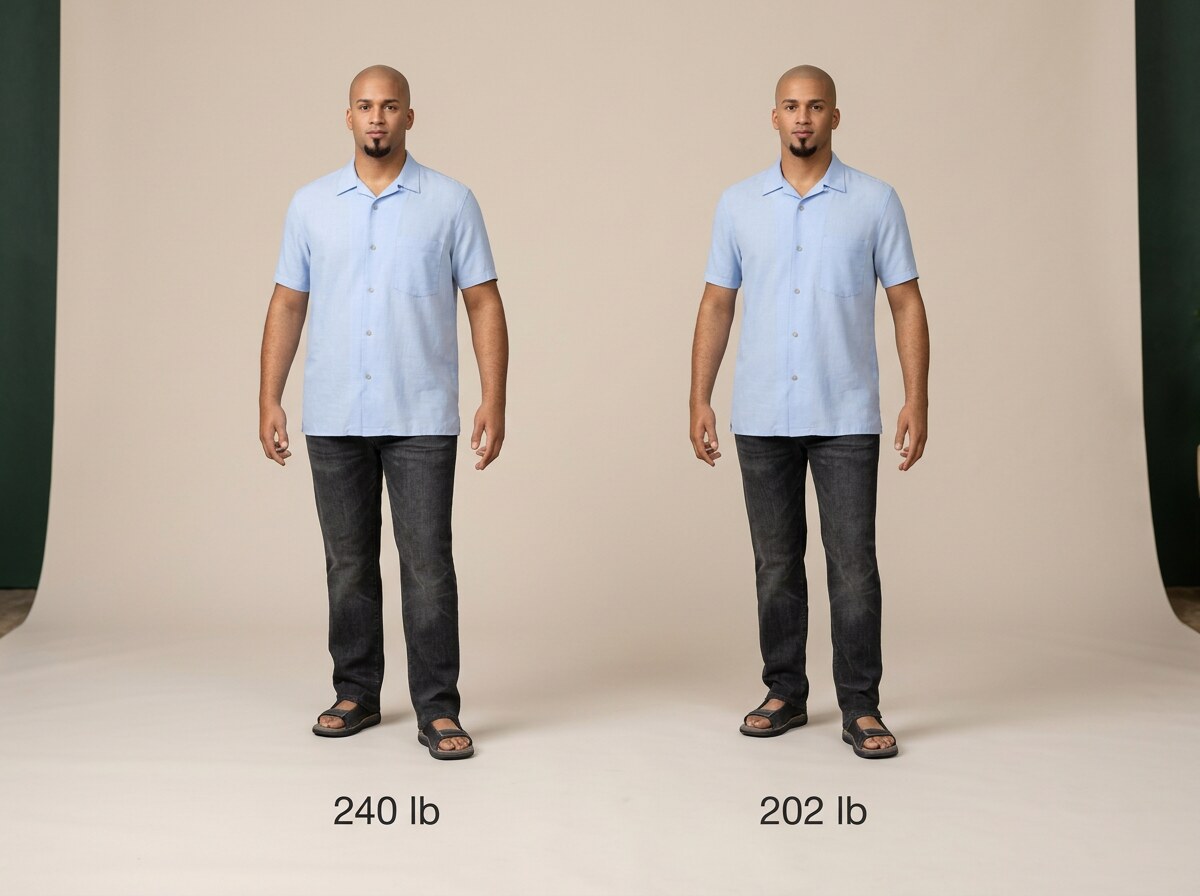
The figure above shows Marcus at 240 and at 202. The difference is 38 pounds, and it’s worth looking at where that difference actually lands. At 240, his face is full, the jawline soft, the neck thick. At 202, the jaw is sharper, the cheeks less puffy, the collar of a shirt sits differently. His waist is where the change is most obvious: at 240 he’s buying pants with a bit of give, and at 202 the same waistband is loose enough that he’d need a belt. His arms thin out too, though that’s the last place most men notice. The mirror is a poor narrator here. You see yourself every day, so you stop seeing the change. The scale says one thing, the mirror says another, and neither is lying. If you want to see what 38 pounds looks like on a body before you start, the simulator at /men.html is the place to look. Put in your height and the two numbers and see them side by side. It’s a better mirror than the one in the bathroom, because it doesn’t get used to you.
The hard part of stopping a GLP-1 isn’t the appetite coming back. It’s that you spent 14 months in a body that felt easy, and you start to believe the ease was yours. The drug was doing the work. You were along for the ride. When it stops, the ease stops, and the gap between what you expected and what you got is where most people give up. Marcus expected to keep losing. He gained 11 pounds instead. He’d come to think of the smaller portions as something he’d learned. They were something the drug was doing for him. That’s a man who mistook a pause for a skill.
The other thing that happens is perceptual. On the drug, you get used to eating less without trying. Off the drug, you get used to eating more without noticing. Your sense of a normal portion drifts with whatever you’ve been eating lately. Marcus didn’t notice the half-orders becoming full orders until his pants got tight. By then he was already 11 pounds up. The fix is to make the portion visible: cook it yourself, put it on a plate, see what a reasonable dinner looks like when nobody’s suppressing your appetite. That’s a skill you can build whether or not you’re on the drug. It’s also the skill that stays.
The three meals you already ate
Write down the three meals you actually ate during your best stretch, whether that was on a GLP-1, on a diet that worked for a while, or just a month when things felt easy. The ones you actually ate and felt good about. Then pick one and learn to make it. Well enough that it’s easier than ordering out.
That’s the whole assignment. Three meals, one of them this week. Marcus is starting with the sandwich, because it’s the easiest and he needs a win. The stir-fry is next. The chicken bowl is a project for later. He’s in the kitchen on a Tuesday, making a sandwich.