
What actually changes for your body after fifty
By Maya · November 9, 2026
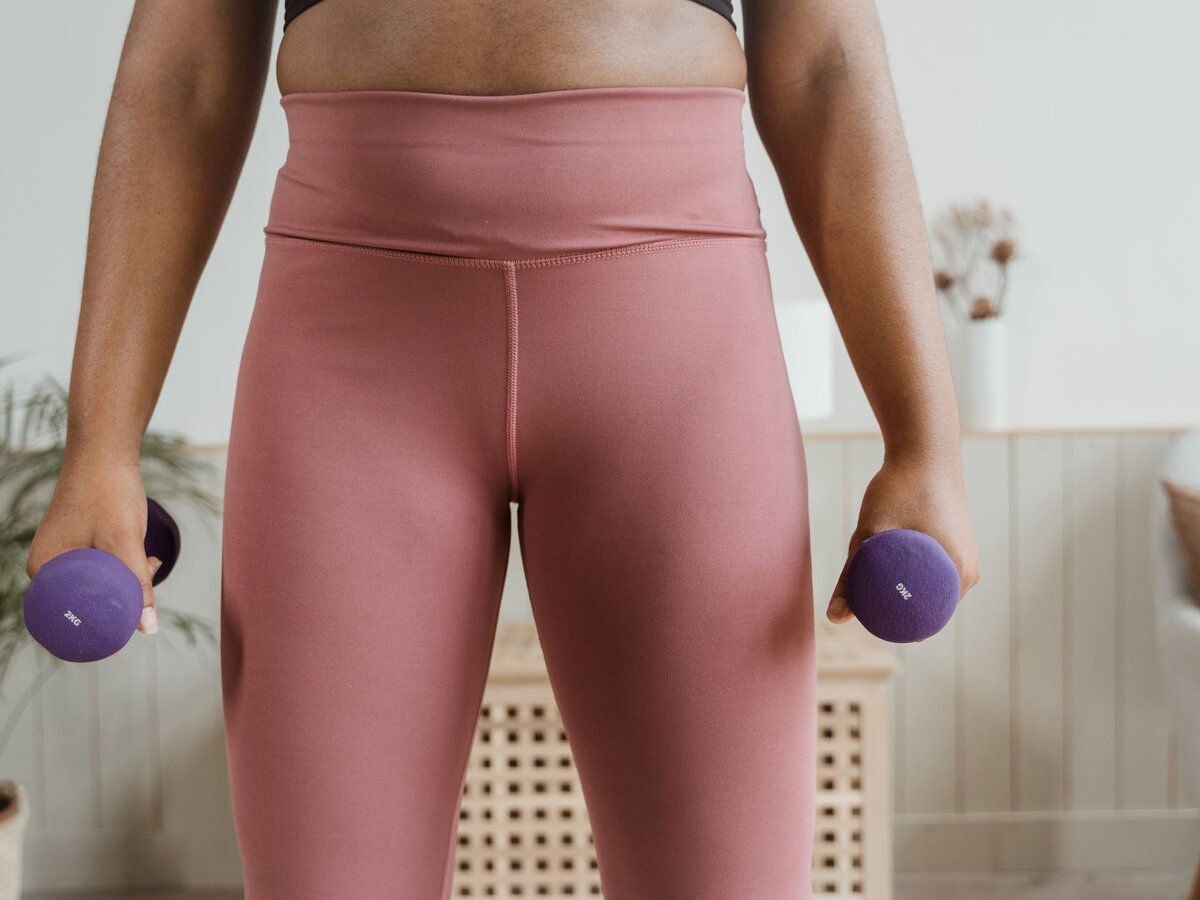
Denise is 56 and schedules surgeries at a teaching hospital. She stands five foot four, and last fall she weighed 195 pounds. She had been walking three miles four mornings a week for years, and she had a Wednesday night step class she genuinely liked. Her knees hurt on the stairs anyway. She was tired by two in the afternoon, and she had started to wonder whether this was just what fifty-six felt like.
She did not need a new protocol. She needed to keep the bones and the muscle she had, and she needed to stop treating her body like a smaller version of her husband’s.
The advice that was never written for you
Most of the longevity rules a woman over fifty hears were written for someone else. The eat-less-lift-more script, the fasted cardio, the supplement stack with five things that sound scientific but end in -ine: all of it landed in women’s magazines and women’s feeds without anyone asking whether a fifty-five-year-old body would respond the same way.
It does not. A woman in her fifties loses muscle differently, recovers differently, and holds onto bone density only if she gives her body a reason. The advice that works is quieter. Denise dropped two of her four cardio mornings and put two twenty-five-minute strength sessions in their place. She added a palm-sized portion of cottage cheese or a hard-boiled egg to a breakfast that had been toast and coffee. She did not buy a new supplement. She did not join a gym. She used a pair of twelve-pound dumbbells and her own kitchen chair for step-ups.
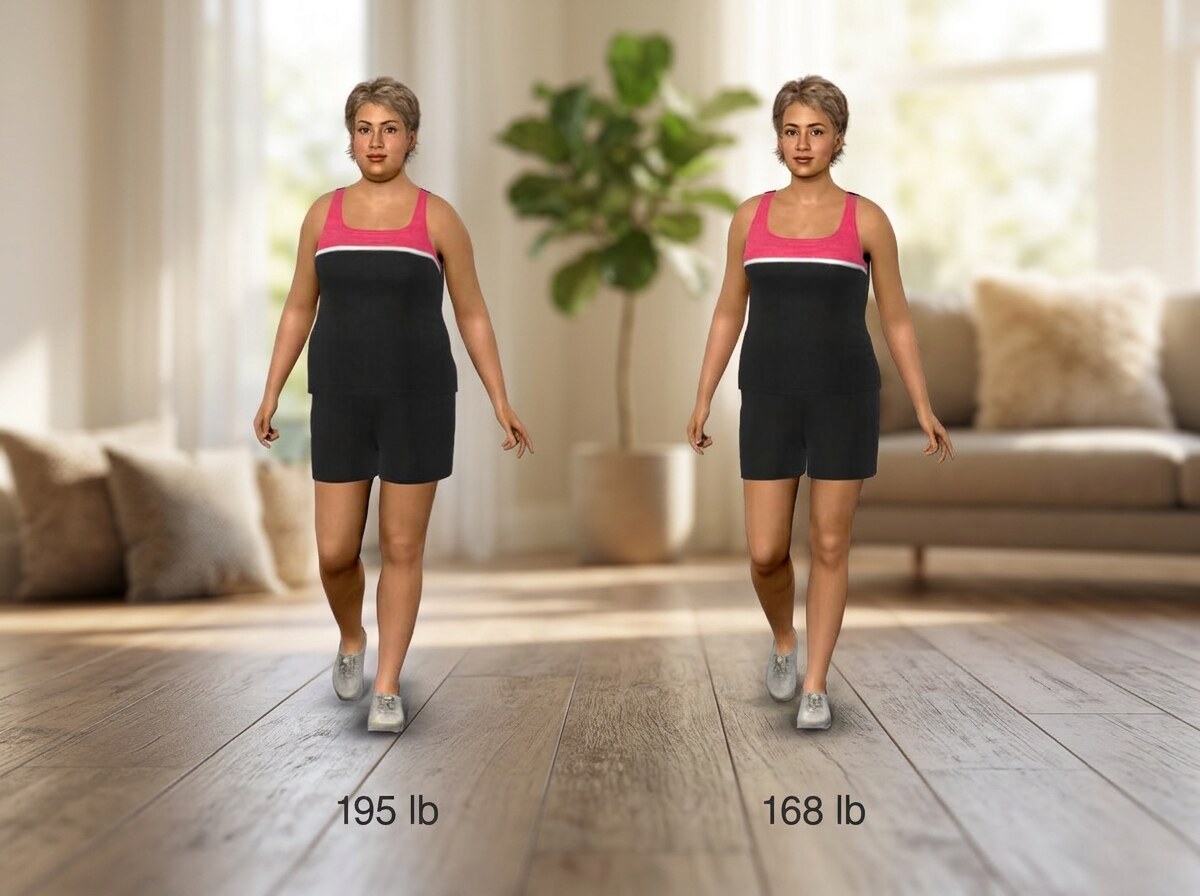
The figure above shows Denise at 195 pounds and again at 168, which is where she is headed. Twenty-seven pounds on a five-foot-four frame changes the shape of a face first. The jawline sharpens, the puffiness around the eyes recedes, and then the waist follows. By the time a woman has lost fifteen or twenty pounds, her clothes sit differently at the hip and the upper arm stops straining the sleeve. The mirror is slow to report this, because you see yourself every day and your brain smooths the difference away. That is why the render matters. You can drag the slider on the women’s simulator to a weight you remember from five years ago and see what your eyes have stopped noticing.
Protein at breakfast, not just at dinner
Denise grew up eating cereal or toast in the morning and saving the chicken breast for evening. That pattern leaves a woman in her fifties running on empty through the hours when her body is most ready to repair muscle. Moving some protein earlier changes the arithmetic of the whole day. Denise started with one palm-sized portion: an egg, a half-cup of cottage cheese, a scoop of Greek yogurt. By the second week she noticed that the midmorning hunger that used to send her to the breakroom muffins had quieted. She was not white-knuckling through until lunch. She was just less hungry.
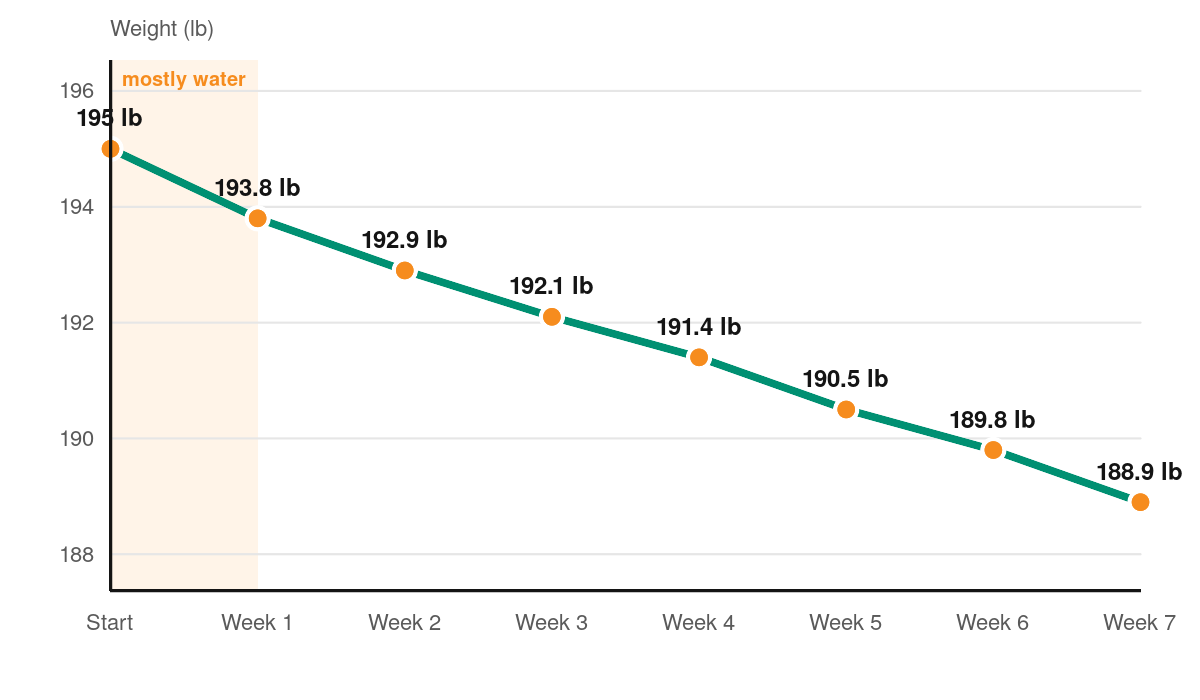
The graph below shows her first seven weeks on the scale. The first week dropped a little over a pound, mostly water, and then the line settled into a slow, honest half-pound a week. That pace is exactly what you want at 56. Faster losses at this age tend to pull muscle along with the fat, and muscle is the thing you are trying to keep.
Two lifts, not six
Denise does exactly two strength movements in a session: a squat to a kitchen chair and an overhead press with her dumbbells. She does three sets of each, twice a week, and she adds a set of step-ups on the bottom stair when she has an extra five minutes. The whole thing takes less time than the step class she gave up, and her knees stopped complaining on the hospital stairwells by March.
A woman over fifty does not need a six-exercise split. She needs to tell her bones and her muscles, regularly, that they are still in use. The squat keeps the hips and the quads strong enough to get out of a low car. The overhead press keeps the shoulders moving through a range that grocery shelves and carry-on luggage demand. When you can do both without thinking about it at 56, you are building the body you will need at 70.
The hardest part for Denise was not the lifting. It was the feeling that two short sessions a week could not possibly be enough. She had spent decades believing that exercise counted only if she was drenched in sweat and moving for an hour. Letting go of that story took about a month. What helped was tracking the lifts themselves instead of the calories burned. The app let her check off two sessions a week, and the checkmark gave her the same satisfaction the step class used to give her, without the sore knees the next morning.
Plateaus hit differently at this age, and they hit more often. A week where the scale does not move can feel like proof that the whole thing has stopped working. Denise hit her first stalled week at week five. She looked at the graph, saw that the line still slanted down over the month, and kept going. The scale moved again the next week. The habit that carries you through a plateau is the same habit that carried you through the first week: do the two lifts, eat the protein at breakfast, and let the calendar do the rest.
Sleep is the recovery tool you already own
Denise had been sleeping six hours a night for years. She saw it as a fact of life, not something connected to her weight. She started turning the light out half an hour earlier, and she stopped looking at her phone in bed. Within two weeks she noticed she was less interested in the afternoon pastry cart, and her Tuesday lift felt less like dragging herself through mud.
Sleep is the one recovery intervention that costs nothing. A short night makes the next day hungrier, and at 56 the body needs the full seven or eight to repair the muscle she was now asking it to build. If you change nothing else this year, protect the seven hours.
What Denise ignores now
She ignores the supplement ads. She ignores the influencer who tells her she needs a continuous glucose monitor. She ignores the friend who insists that menopause means you have to cut all carbs. She still eats oatmeal. She still has a glass of wine on Friday. She added strength and protein, and she subtracted nothing except the idea that her body was supposed to respond like a thirty-year-old man’s.
Her next goal is 168 pounds, and she will get there sometime next winter. She is not in a hurry. The stairs at the hospital feel ordinary again, and that is the thing she notices most.