
The GLP-1 lifting advice is for you too, even if you're not on it
By Maya · November 26, 2026
The headlines this month have a single story to tell: if you’re losing weight on a GLP-1, you should be lifting weights. The advice is everywhere, and the reasoning makes sense. But the framing leaves a quiet impression on the other readers, the ones who aren’t on the medication, the ones losing weight the slow way or just thinking about it. The message they absorb is that resistance training is a management tool for a specific drug, not a piece of advice that belongs to them.
It does. The reason to lift in your fifties has nothing to do with what’s in your medicine cabinet and everything to do with what you want your seventies to look like.
Priya is 54 and runs the front office at a middle school in Brampton. Over the past year she lost 22 pounds by eating a little less and walking a lot more. She felt good about the number on the scale. What she didn’t feel good about was the afternoon she carried two bags of groceries up the six steps to her front porch and had to stop halfway to rest her arms. The bags weren’t heavier than they used to be.
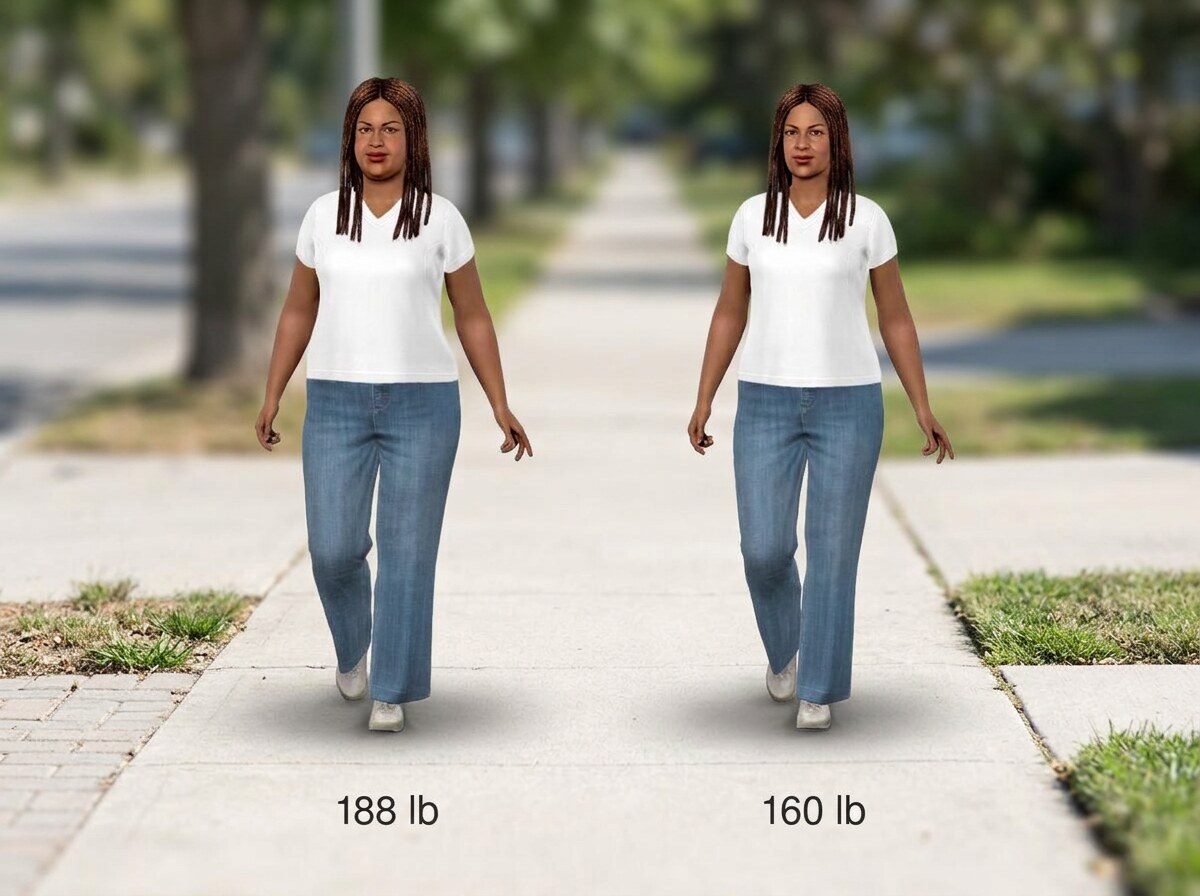
The figure above shows Priya at 188 pounds and again at 160, the weight she is working toward. Twenty-eight pounds is a real shift on a 5’4” frame: her face narrows, her waist pulls in, the shape of her shoulders emerges. But the render also shows something the scale doesn’t track. The arms and the posture that carried those grocery bags didn’t just lose fat; they lost the muscle that was doing the carrying. When you lose weight without resistance training, some of what leaves is the tissue you actually want to keep. You can see it in the simulator at our women’s visualization page: the change in the waist is the first thing the eye catches, but the change in the arms and upper back is what you feel on a Tuesday afternoon with two bags of milk and a sack of onions.
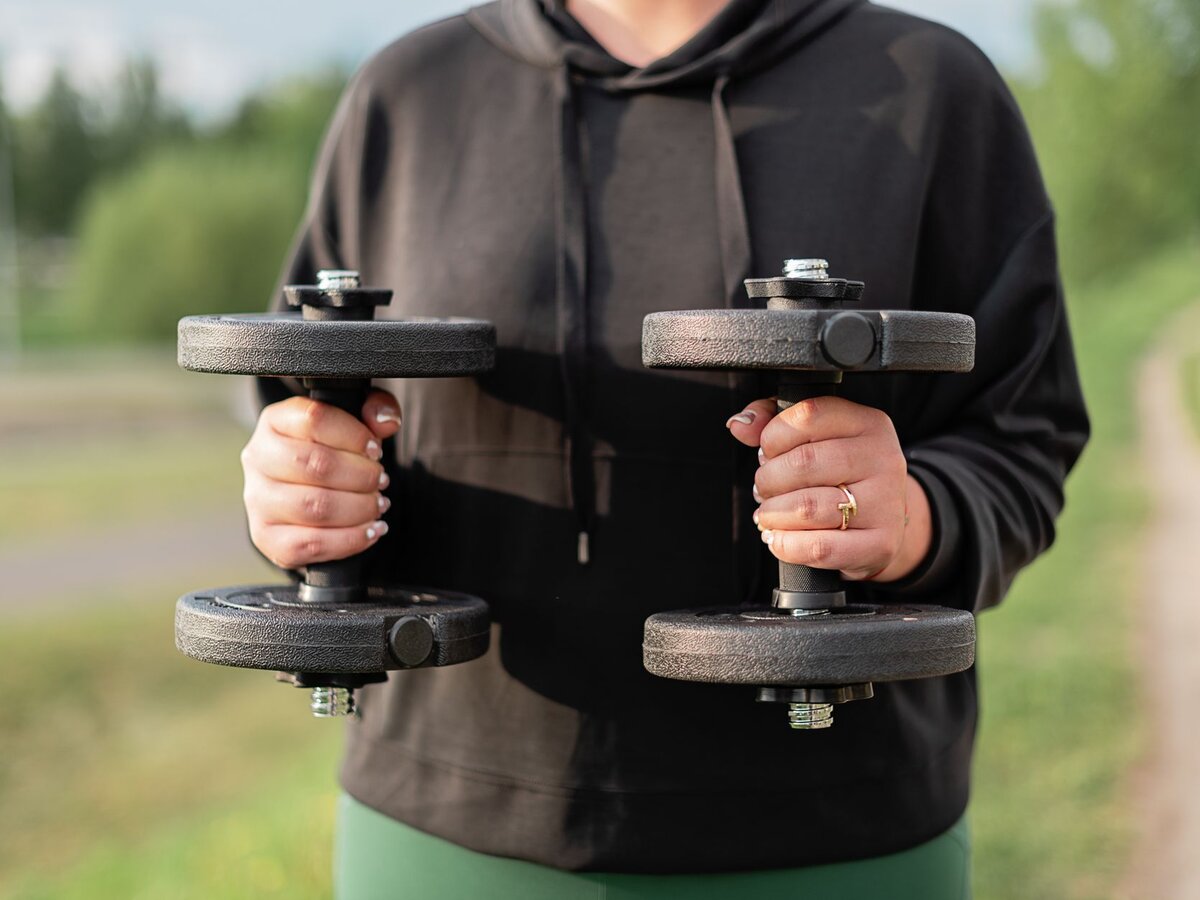
The tricky part is that walking gave Priya a clear scoreboard. She knew her route, she knew her time, and the scale moved downward in a way that felt like proof. Adding two twenty-minute sessions with a pair of dumbbells and a sturdy chair didn’t give her any of that at first. There was no number ticking down, no distance covered, no calorie readout she trusted. What she got instead was a Wednesday when she noticed the chair squat felt a little less wobbly, and a Saturday when she carried both bags up the steps without thinking about it until she was already inside.
That’s the gap between a habit that looks productive and one that actually changes what your body can do. The scale rewards consistency over weeks. The porch steps reward consistency over months, and they don’t give you a graph. If you’re used to measuring progress by what the scale says every morning, the silence of getting stronger can feel like nothing is happening. It is happening. The mirror won’t show it and the scale won’t either, but your body is keeping a record you’ll cash in later.
Priya picked two movements and two days. On Tuesdays and Fridays, she does a sit-to-stand from a kitchen chair holding a ten-pound dumbbell in each hand, and a bent-over row using the same weights, bracing one hand on the back of the chair. That’s the whole workout. Twenty minutes, no gym, no special equipment beyond what she already had in the basement from a fitness phase ten years ago. The movements don’t look impressive, but they map directly onto the things she needs to do: stand up from a low seat without using her hands, pull a heavy door open, lift a bag from the floor to the counter.
By spring the porch steps were unremarkable again. She noticed it the way you notice a headache that finally goes away, just the return of something that used to be normal. That’s the goal. Not a personal record, not a before-and-after photo, just a body that does what you ask it to without a negotiation.
There is a longer game here, and it’s the same one people on GLP-1 medications are learning the hard way. Every year after about age thirty, adults who don’t do resistance training lose a small amount of muscle. It’s slow enough that you don’t notice it until you need it: getting out of a low car, recovering your balance on an icy sidewalk, carrying a grandchild who won’t hold still. The time to bank that strength is now, while you still have it to keep. Talk to your doctor before starting a new routine, especially if you have an old injury or a condition that needs a thoughtful approach.
Pick two days. Pick two movements that look like your actual life: a squat, a row, a press, a carry. Do them for twenty minutes. Log them in the app so the streak does the work when the motivation doesn’t show up. On a Tuesday afternoon three months from now, you’ll carry your own groceries up the steps without thinking about it. That’s the whole point.