
One hour earlier to bed, and the snacking window closes itself
By Maya · November 13, 2026

Rosa is 46 and works the front office at a middle school in a suburb of Sacramento. She is on her feet a fair bit during the day, but once dinner is done and the kitchen is clean, the evening becomes a long stretch of television and a slow, steady graze through whatever is in the cupboard. She usually turned the light out around twelve-fifteen and woke up feeling like she was already behind. In late September she decided to try moving her bedtime to eleven-fifteen, just to see whether a full hour of extra sleep felt any different. She did not change her meals, she did not start a new workout, and she did not ban any food from the house. She simply got into bed an hour earlier.
Three weeks later her jeans fit a little looser and the scale had dropped just over three pounds. The surprise was not the number itself, which is modest, but the fact that she had not consciously cut a single calorie. What she had cut was the ninety minutes of television snacking that used to sit between eleven and midnight.
The late-evening eating window
Many people who struggle with their weight are not overeating at breakfast, lunch, or dinner. They are eating a fourth meal in small, continuous handfuls between nine and midnight. A handful of cereal, a few crackers, the last slice of the kids’ pizza, a bowl of ice cream that started as a spoonful. None of it feels like a decision, and none of it gets logged anywhere, but over the course of a week it adds up to a substantial surplus.
When Rosa moved her bedtime forward, she did not tell herself she was giving up snacks. She simply stopped being awake for the hour when the snacking happened. The television stayed off, the kitchen light stayed off, and the question of whether to have a bowl of cereal never arose because she was already asleep. The calorie reduction was accidental, which is part of why it stuck.
Hunger the next morning
A late night adds calories after dinner. It also reshapes the morning that follows. Rosa noticed that after a short night of sleep she woke up with a blunt, impatient hunger that demanded something quick and dense, usually a bagel or a pastry from the staff room. On the mornings after she had been in bed by eleven-fifteen, she woke up hungry but not urgent. She had time to make oatmeal, to sit down, to notice when she was full.
This is the second way an earlier bedtime helps, and it is less visible than the snacking window. A rested body registers hunger more gradually, which makes it easier to choose a breakfast that actually holds you until lunch. Over three weeks, Rosa’s breakfasts shifted from whatever was fastest to whatever was in the fridge that she could put together in ten minutes. She did not plan the shift; it simply became possible.
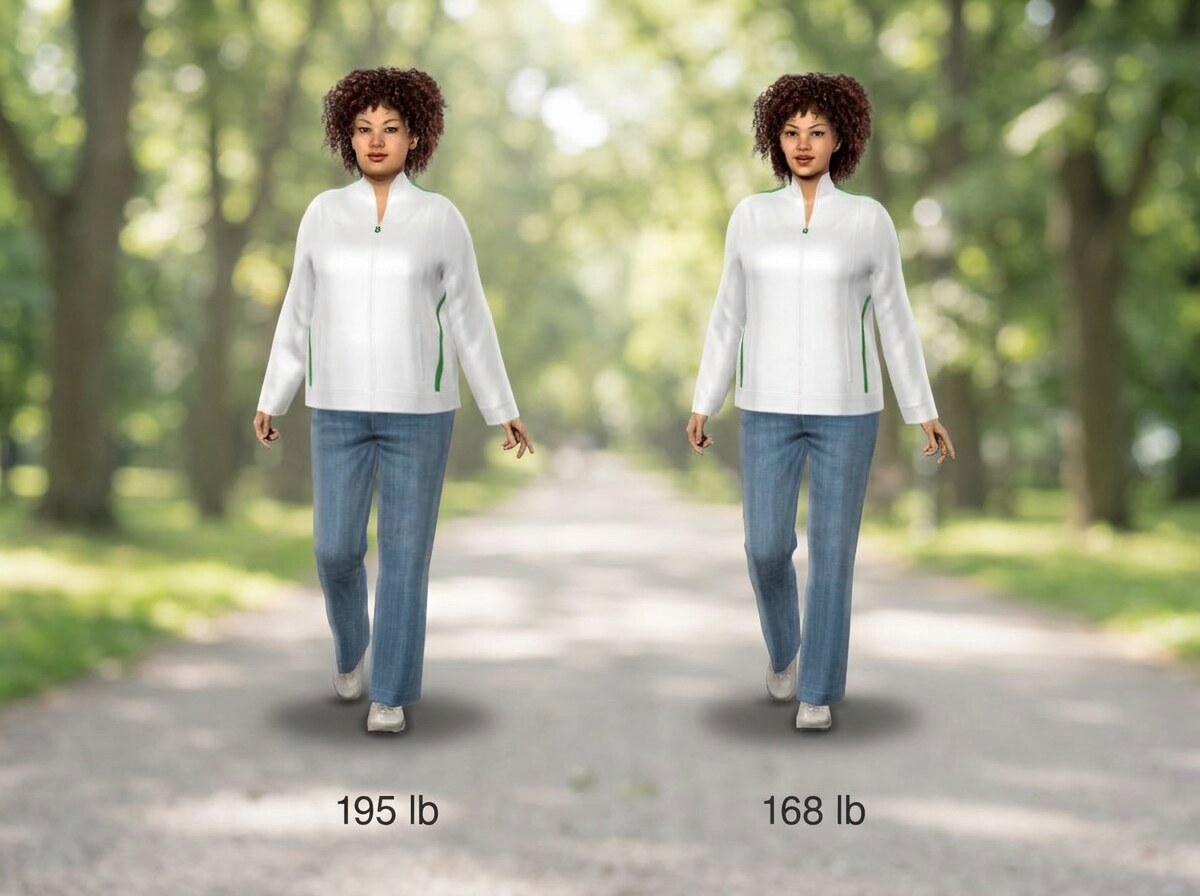
The figure above shows what a change of roughly twenty-seven pounds looks like on a woman of Rosa’s height and build. At 195 pounds, the extra weight sits evenly across her frame, softening the jawline, rounding the upper arms, and thickening the waist. By 168, the face is the first place a difference registers. The cheekbones emerge, the line of the jaw sharpens, and the puffiness below the chin recedes. The waist follows soon after, and by the time she is within ten pounds of her goal, the change in her midsection is the thing she notices most when she catches her reflection.
What the mirror does not show well is the first five pounds, which is why the simulator on our women’s page is useful. You can dial in your own starting weight and goal and see the shift that a modest loss produces. Rosa’s first three pounds were invisible to her eye, and if she had been relying on the mirror alone she might have assumed nothing was happening. The scale told a different story, and the render made it believable.
The hardest stretch of any change is the first two weeks, because that is when the effort is highest and the visible reward is zero. Rosa knew this from past attempts. What made this time different was that the effort did not feel like effort. She was not resisting snacks through willpower; she was simply asleep. The scale moved a little in week one, a little more in week two, and by week three the numbers were trending in a direction that felt sustainable.
Perceptual adaptation works against you in the early going. You look in the mirror every morning and see the same person, because the changes are too gradual for the eye to catch. The scale catches them, but only if you weigh yourself consistently and give the numbers time to form a pattern. Rosa weighed herself every Friday morning, first thing, and wrote the number in a notebook. The notebook showed her what the mirror could not.
The graph below
Rosa’s first three weeks looked like this: 195, then 193.8, then 193.2, then 192.7, then 191.9. The drop was not dramatic, and week three was slower than week one. The first week always includes water weight as the body adjusts to fewer late-night carbohydrates. After that the pace settles into something closer to a pound a week.
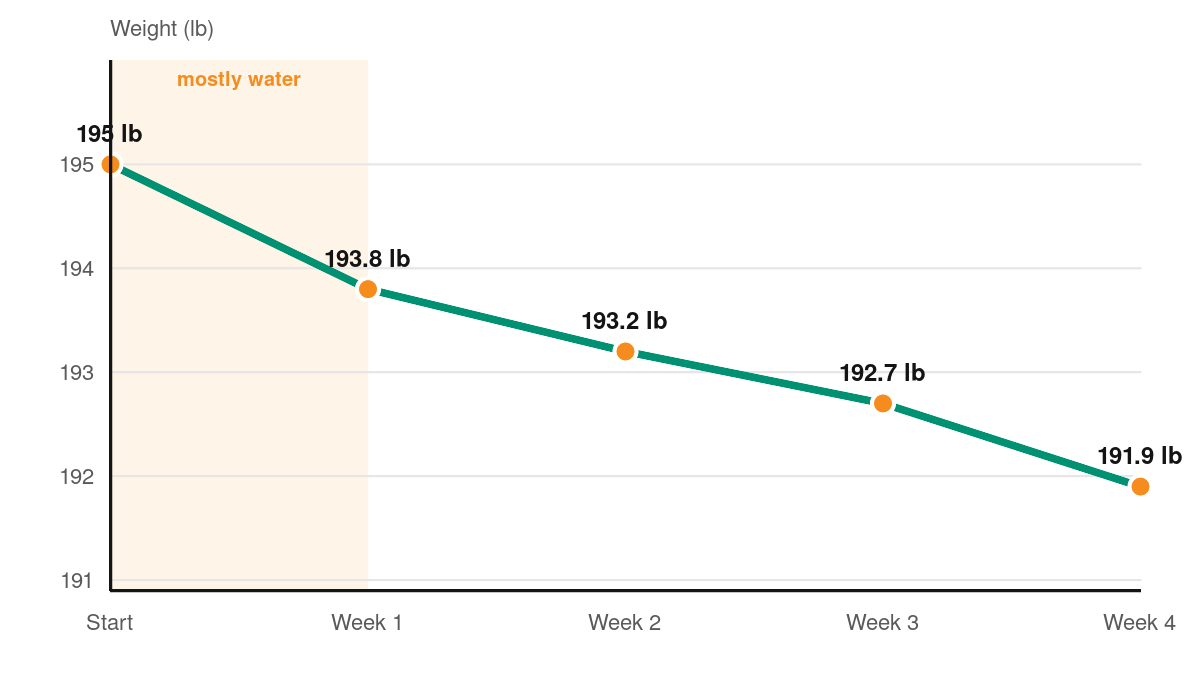
Week three was also when Rosa noticed the first non-scale change: her waistband felt less tight in the evening. She had not expected that, because three pounds spread across a whole body should not make a visible dent. But the location of the loss matters. The midsection is where late-evening snacking tends to deposit its surplus, and it is the first place that surplus leaves when the snacking stops.
Picking a bedtime you can keep
An earlier bedtime only works if you can hit it most nights. Rosa aimed for eleven-fifteen five nights a week and gave herself Friday and Saturday off without guilt. The five-night rule meant she was not chasing perfection, and the two flexible nights meant she did not feel like she was giving up her social life. Over the course of a month, five nights out of seven adds up to twenty extra hours of sleep and roughly twenty fewer hours of access to the snack cupboard.
If you want to try this, pick a bedtime you can hit five nights out of seven and protect it the way you would protect a standing appointment. Tell the people you live with, set an alarm for thirty minutes before as a wind-down prompt, and put your phone on the charger in another room. The phone is the single biggest thief of early bedtimes, because it has no natural stopping point. A charger in the kitchen solves that.
What to track
Rosa tracked two things: her bedtime in a notes app and her weight once a week on the scale. She did not track calories, steps, or macros. Two data points were enough to show her whether the habit was holding and whether it was doing anything. After three weeks she added a third: how she felt when she woke up, rated on a simple one-to-five scale. The rating kept her honest on the nights when she was tempted to stay up, because she knew she would have to write down a two the next morning.
Our app lets you log your weight and a short sleep note in the same place, which makes the pattern easier to spot. When you see the graph start to bend downward, the habit stops feeling like an experiment and starts feeling like something that belongs to you.
Rosa is still going. She has not added any new rules, and she still eats popcorn on Friday nights. The difference is that Friday night now ends at eleven-fifteen instead of stretching past midnight, and Saturday morning feels like a morning instead of a recovery. Talk to your doctor before you change your routine, especially if you have an underlying condition that affects your sleep or your weight. Then pick a bedtime, write it down, and see what the scale says in two weeks.