
Cold plunges won't fix your winter. A cool room might.
By Maya · November 6, 2026
Priya is 44 and lives in a suburb where everyone seems to have a cold plunge tub in their garage. Last winter she bought one for $180, used it four times, and sold it on Facebook Marketplace in March for $90. The cold made her gasp, her fingers went numb, and she never once felt the euphoria people post about. What she did keep from that season was smaller: she turned her bedroom thermostat down to 65 at night, and she stopped wearing her heavy parka for the ten-minute walk to her kids’ school. She just wears a light jacket and lets the cold sit on her arms. She has done that every day since November, and she plans to keep doing it in February.
Cold plunges, ice baths, and shiver walks are all over social media right now, and the headlines about worms living longer in cold temperatures make it sound like an easy trick. But what you see in the headlines does not match what people actually notice. The dramatic claims come from worms and mice. In people, the changes are smaller and harder to measure. You do not need to buy a tub or dump ice in your bathtub. You just need to be a little cold on purpose, in ways that are free and simple to keep doing.
The cold habit you already have
The easiest cold habit is the one you do not have to schedule. Priya walks her kids to school every morning. It takes ten minutes. She used to bundle up in a heavy coat, hat, and gloves the moment the temperature dropped below 50. Now she wears a light jacket and lets her hands get chilly. She is not shivering, just uncomfortable for a few minutes. That is the whole habit.
You can do the same thing on a dog walk, a commute, or a trip to the mailbox. The point is not to suffer. The point is to spend a little time each day in a temperature that makes your body work to stay warm. A brisk walk in cool air is enough. You do not need to stand in a barrel of ice water to get whatever benefit cold exposure offers humans. The science is unsettled, but the practical version costs nothing and takes no extra time.
Where the cold actually shows up
Priya’s scale did not move much over seven weeks. She started at 185 pounds and is down to 182.1, which is less than half a pound a week. The graph below shows the slow, uneven line. Some weeks she dropped a pound, some weeks nothing. That is normal for a small habit stacked on top of an already busy life.
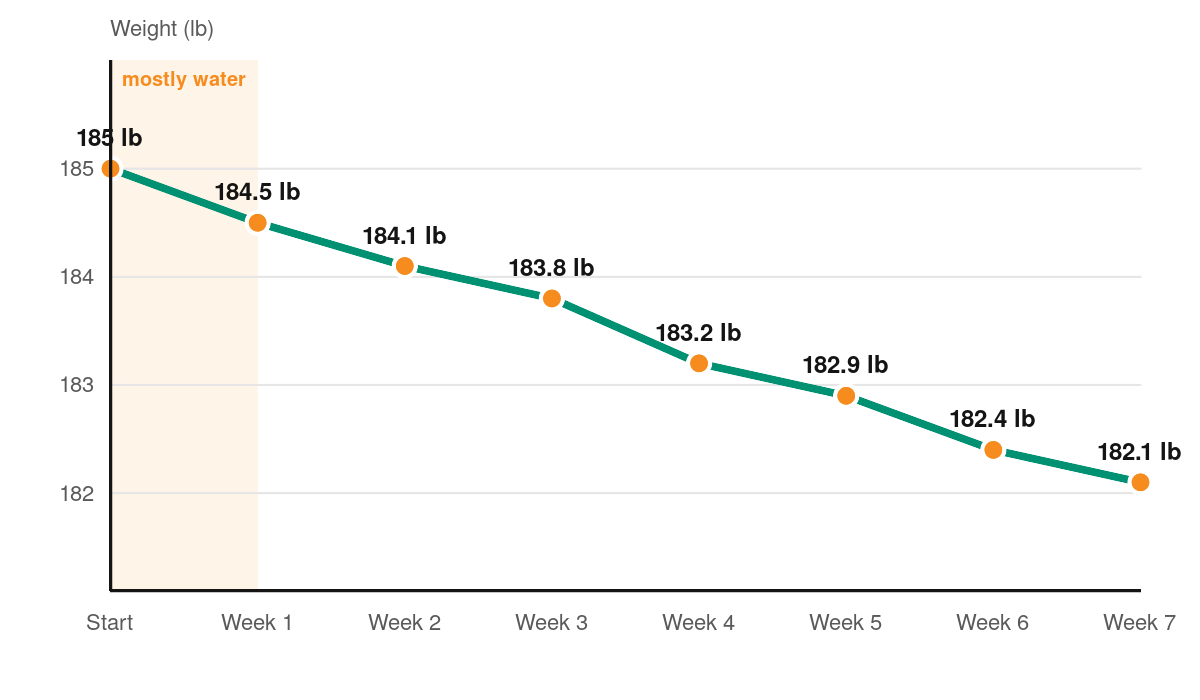
The graph below shows Priya’s weekly weigh-ins over seven weeks of cool sleep and cold walks. The loss is modest, but it is steady, and she has not changed anything else about how she eats or moves.
What changed more than the scale was her sleep. She falls asleep faster in a cool room and wakes up less groggy. Her morning walk used to feel like a chore she rushed through; now it feels like a reset. She is not expecting the cold to add years to her life. She is just noticing that her winter feels less heavy.
What the change looks like
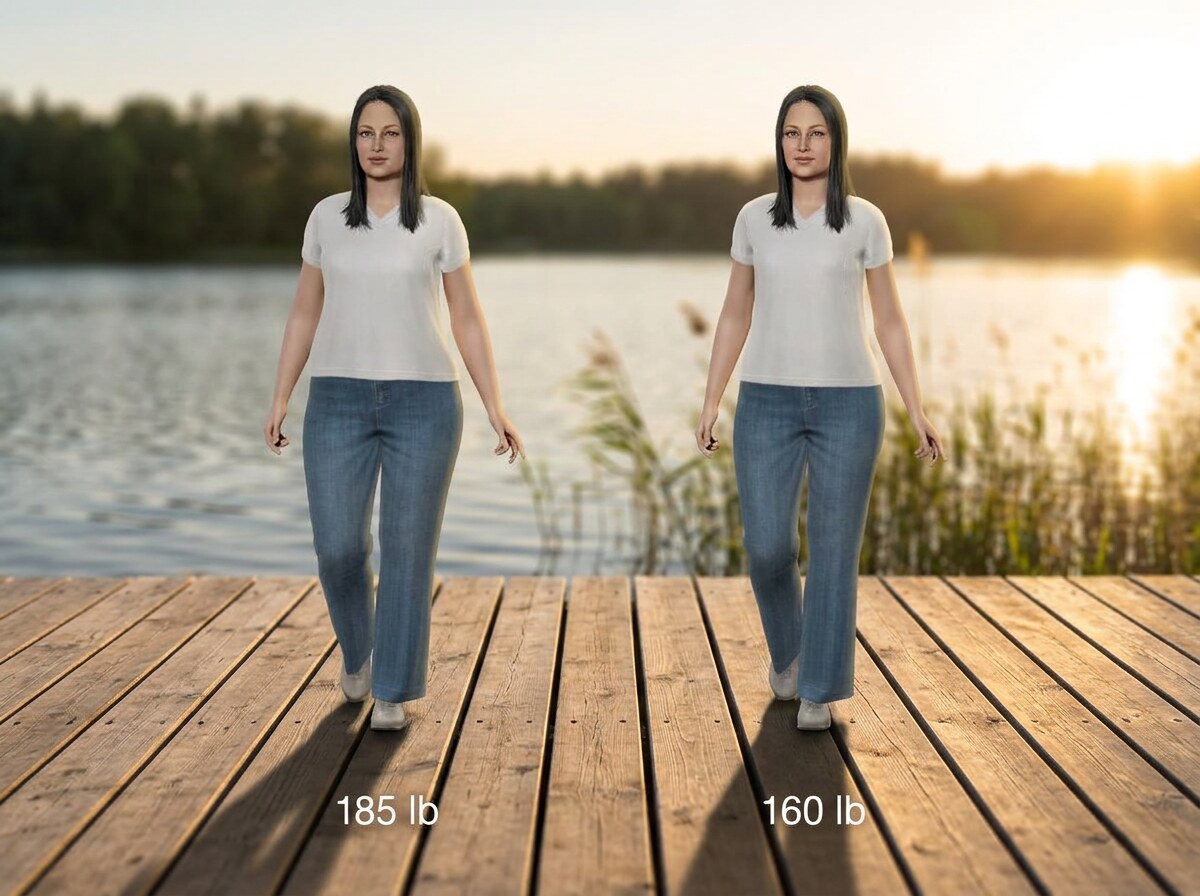
Priya is 5’4” and started at 185 pounds. Her goal is 160. The figure above shows her at both weights side by side. At 185, her face is a little fuller and her waist is softer. At 160, her jawline is sharper and her midsection looks trimmer. Those 25 pounds make a visible difference, but they are not the kind of change you see in a week. Priya has lost three pounds so far, and she cannot see it in the mirror. The scale says it, but the mirror says nothing has changed.
That disagreement is normal. Weight comes off your face and waist first, but three pounds spread over a whole body is invisible. The figure above shows the whole journey, not the first month. If you want to see what your own goal looks like, you can use the simulator on our women’s page to render your starting and goal weights. It helps to have a picture of where you are going when the mirror is not cooperating.
Why the tub did not stick
Priya sold her plunge tub because it was a hassle. She had to fill it, wait for it to get cold, and then force herself to get in. The habit had too many steps and too much discomfort. The cool bedroom and the light jacket are the opposite. They require no setup and no willpower. She just turns the thermostat down before bed and grabs a different coat on the way out the door.

The psychology of sticking with a cold habit is the same as any other habit: make it easy, make it automatic, and make it something you do not have to think about. Priya does not wake up and decide to be cold. She just lives in a cooler house and walks outside in a light jacket. The decision was made once, back in November, and now it is just her life.
The other trap is expecting a big payoff. Cold plunges promise a rush of energy and a longer life, but most people do not notice those effects. If you buy a tub expecting to feel amazing, you will probably be disappointed. If you turn down the thermostat and take a chilly walk, the payoff is smaller but easier to notice: better sleep, a clearer head, and a winter that feels less like a battle. That is enough to keep going.
What to do this week
Pick one cold habit you can do without buying anything. Turn your bedroom down to 65 tonight. Tomorrow, wear one layer less than you usually would for your morning walk or commute. Do not time it or track it or post about it. Just notice how it feels. If you want to see whether it is changing your week, log it in the app alongside your weight and sleep. The graph will tell you more than your Instagram feed will.