
Your muscles don't read the longevity headlines
By Maya · October 7, 2026

Carol is 63 and she eats one really solid dinner every night. A chicken breast, some roasted potatoes, a pile of green beans. Before that, breakfast is toast with jam and lunch is a cup of soup or a small salad. She is not overeating, she is not snacking on junk, and she is doing what feels sensible for a woman who wants to keep her weight in check. But Carol has started noticing something that bothers her more than the number on the scale. Getting up from a low couch takes a little push off the armrest now. The bag of potting soil she carried in from the car last spring felt like a genuine project. She feels weaker, and she wonders if that is just what 63 feels like.
What Carol is running into relates much more to muscle than to age.
Protein confusion
Every few months a new study lands and the headlines flip. Protein is the secret to a long life. Restricting protein is the secret to a long life. Animal protein ages you. Plant protein saves you. A reasonable person shrugs and keeps eating whatever she was eating before.
The confusion exists because the researchers are asking two separate questions. One question is about lifespan in a lab: what makes a simple organism live longer under tightly controlled conditions. Those studies look at cells in dishes. The other question is about staying functional in a human body that is sixty or seventy years old: what keeps you able to carry a bag of soil, climb stairs, and catch yourself when you trip on the curb. That question has a straightforward answer, and it points toward more protein, spread across the day.
For someone in their sixties, the second question is the one that determines whether the next two decades are spent walking a local trail or sitting in a recliner. Muscle loss accelerates after fifty unless you give your body a clear, repeated signal to hold onto it. That signal is dietary protein.
Carol’s day
Carol’s dinner has enough protein. A large chicken breast provides a solid amount for one meal. The problem is the fifteen waking hours that come before it. Toast with jam gives her maybe three grams. A cup of lentil soup might give her eight or nine. By the time she sits down for dinner she has spent the entire day in a state where her muscles are getting no real signal to repair or maintain themselves, and one big evening dose cannot fully make up for the deficit.
Your body repairs muscle with protein, and it does this best when protein comes steadily through the day. A single large serving at dinner does not do the same work as two or three moderate servings spread out. Carol is giving her muscles the raw materials for one hour and leaving them waiting for the other twenty-three.
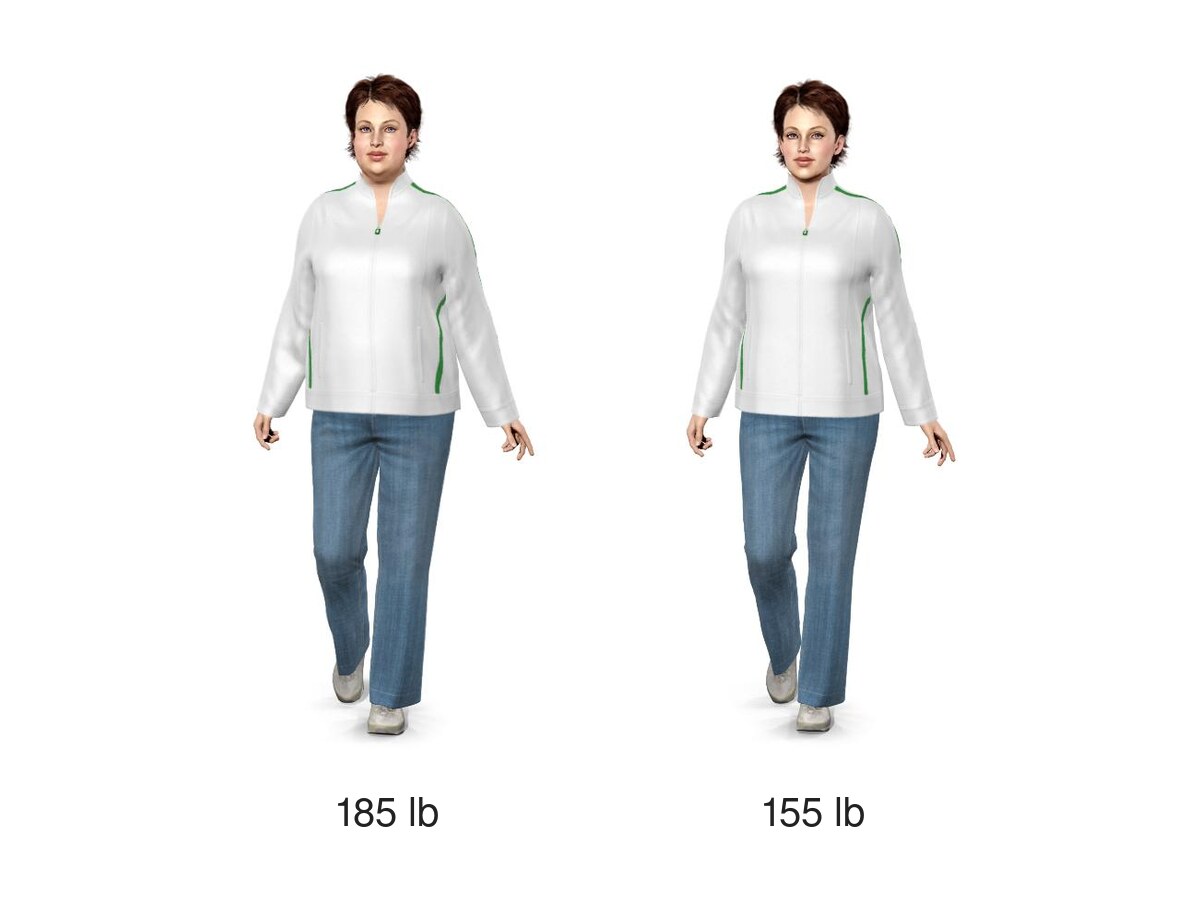
The figure above shows what thirty pounds looks like on a woman’s frame. Look at the shoulders, the arms, the way the body carries itself. When someone loses weight without protecting the muscle underneath, the shape that emerges differs from expectations. The scale does not know whether the pounds leaving are fat or the quadriceps you need to stand up from a toilet seat at eighty. You can see the change for yourself with the simulator. Try your own starting point and goal at our women’s visualization page and notice where the shape shifts first.
The mental trap here is that Carol feels like she is doing the right thing by eating light during the day. She has spent decades absorbing the idea that a small lunch is sensible and a big breakfast is for people with manual-labor jobs. Changing that pattern feels like giving herself permission to overeat, and that feeling is uncomfortable. But she is really just moving food. The palm-sized portion of protein that currently lands on her dinner plate is simply going to appear at breakfast and lunch instead, and dinner will shrink a little to make room.
A second psychological hurdle is that strength changes are slow and invisible week to week. Carol will not wake up on Thursday and feel dramatically different. What she will notice, if she pays attention, is that the armrest push becomes optional again sometime in the next two months. That kind of progress is easy to miss because the brain adapts to a new normal almost as fast as the body creates it. The trick is to pick one concrete test and check in on it once a month. Stand up from a low chair with your arms crossed. Carry a full laundry basket up the stairs. Write down how it felt and check again in four weeks.
The protein target
Pick a protein target for breakfast and lunch that gets each meal into a solid range. For breakfast that might mean two eggs with a half-cup of cottage cheese, or a scoop of whey protein in a smoothie with milk, or Greek yogurt with a handful of almonds. For lunch it might mean a can of tuna on a salad, or leftover chicken from last night’s dinner, or a cup of edamame with quinoa. The exact food matters less than the number. Check a label once, learn what a good serving looks like on your plate, and then just repeat it.
If you use a food log, even for three days, a pattern jumps out immediately. The Model My Diet app lets you see your protein spread across meals at a glance, and most people are surprised by how lopsided their day really is. Three days of logging is enough to spot the gap and fix it.
Longevity that matters
The longevity research that makes headlines is interesting but it rarely addresses the practical question of whether you will be able to lift your suitcase into an overhead bin at seventy. Leg strength is one of the best predictors of staying independent as you age. Falls, fractures, and the cascade of decline that follow them are overwhelmingly a story of muscle that was allowed to slip away a decade earlier.
Eating enough protein, spaced across meals, is the simplest lever you have to pull. It does not require a gym membership or a supplement drawer or a special diet name. It just requires noticing that your muscles need the raw materials, and they need them more than once a day.
Three months later
Carol moved one egg and a half-cup of cottage cheese to her morning and put a palm-sized piece of salmon on her lunch salad. She still eats dinner, but the chicken breast got a little smaller to make room for the earlier meals. She did not add a single minute of exercise and she did not change her total calories by more than fifty in either direction. Three months later she noticed she had carried the potting soil from the garage to the back deck without setting it down once. Talk to your doctor before making big changes, but for most people this is not a big change. It is just putting the protein where your body can actually use it.