
The GLP-1 headlines won't carry your groceries upstairs
By Maya · October 28, 2026
Renata is 61 and lives in a townhouse with stairs she used to avoid. For three months this winter she read every article she could find about GLP-1 drugs and aging. She bookmarked the CNN piece, then the longer one from a science magazine, then a dozen forum threads where people argued about whether the drugs slow down the clock or just the scale. She learned a lot about study design and almost nothing about what to do on a Tuesday. The headlines gave her a question for her doctor, which is useful, but they also gave her a reason to wait, which is not.
The drug conversation is real and it belongs in a doctor’s office. Whether a GLP-1 makes sense for Renata depends on her blood work, her medical history, what she has already tried, and what her insurance covers. That is a decision she and her doctor can make together. But the part the headlines keep skipping is that whatever the medication does or doesn’t do for aging, it doesn’t carry the groceries. It doesn’t keep the stairs usable. It doesn’t let you get up from a low chair without pushing off with both hands. Muscle does that. And muscle is a decision you can make this week without a single study in your browser tabs.
Renata started with two 20-minute strength sessions a week. She used a pair of 8-pound dumbbells and a kitchen chair for sit-to-stands. The first week, her legs shook on the second set and she had to rest halfway up the stairs. She also added a protein anchor at breakfast: two eggs and a scoop of cottage cheese instead of toast and jam. Nothing dramatic. The scale moved slowly, which she expected, because she was not doing this for the scale. She was doing it for the hill between the grocery store and her front door.
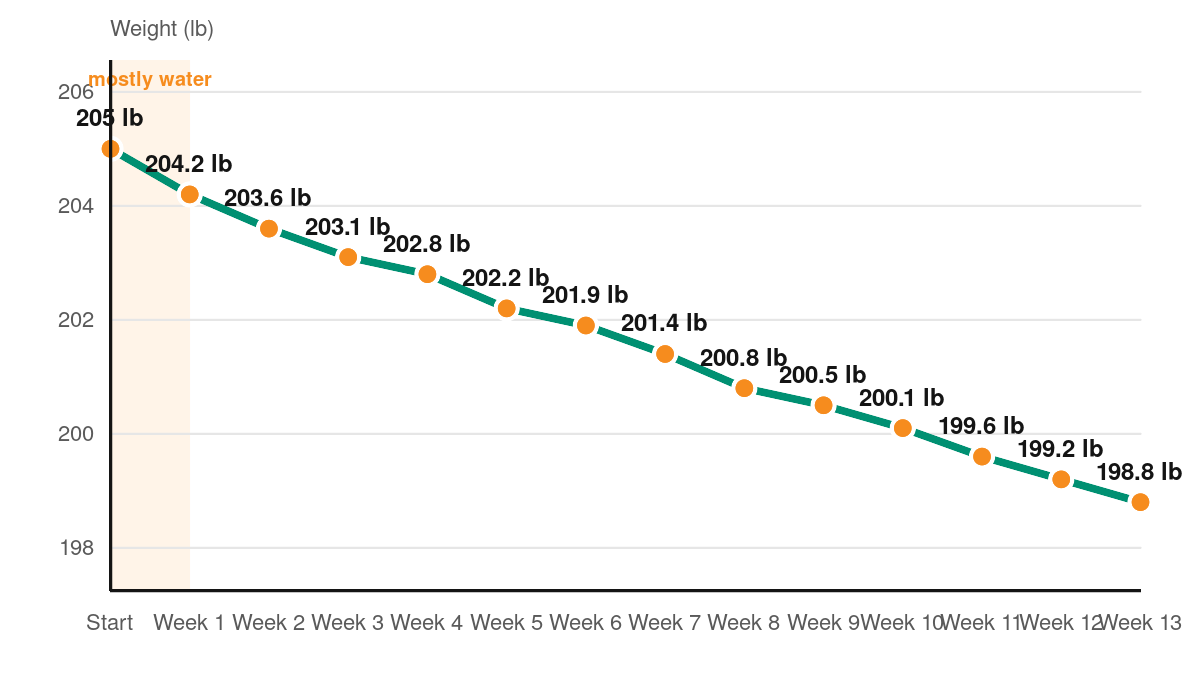
The graph below shows Renata’s first thirteen weeks. She started at 205 pounds and weighed in once a week. The first week dropped a little over half a pound. Then a little less. Then a little more. By week thirteen she was at 198.8, which works out to just under half a pound a week on average. That is not a headline number, but it is an honest one. The graph looks almost flat if you glance at it, and that is exactly the point. The change she noticed had nothing to do with the slope of that line. It had to do with the fact that in week nine she carried two full grocery bags up the hill without stopping, and in week twelve she stood up from the sofa holding a basket of laundry and didn’t think about her knees.
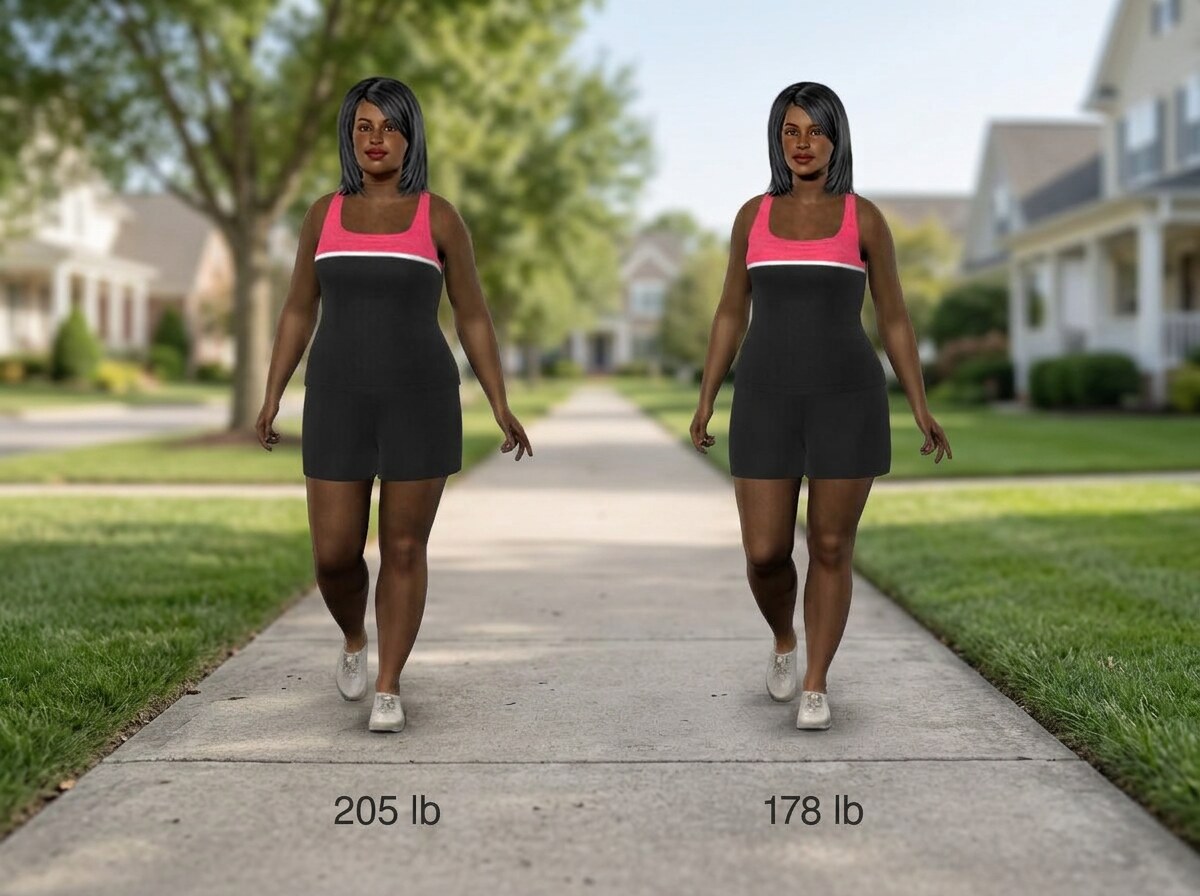
The figure above shows Renata at 205 pounds and at 178, the goal she is working toward over the next year or so. Twenty-seven pounds takes time, and you can see where it lands first. At 205, her face is a little fuller and her waist is soft. At 178, the jawline sharpens and the waistband sits differently. What the figure can’t show is the part that matters most for the longevity question: the muscle underneath. The render looks thinner at 178, but the reason she will feel younger at 178 is not the missing fat alone. It is the legs that can carry her up the hill. When you look at the two figures side by side, notice the face and the waist. Those are the places weight shows first on a woman her height. The mirror and the scale will disagree for months, because the scale can’t tell the difference between losing fat and keeping muscle. The figure above is a reminder of where she is going, not a weekly report card. You can see the same thing on your own body with the simulator at /women.html.

The strange thing about the GLP-1 headlines is that they make a person feel like she is falling behind by not having an opinion. Renata felt it. Every article she read made the decision feel urgent, as if the drug window was closing and she had to know by Friday whether she was for it or against it. But the truth is that no medication decision is made better by reading twelve more articles. It is made better by knowing your own numbers, writing down your own questions, and sitting with a doctor who knows your chart. The urgency the headlines create is a kind of noise. The quiet work of picking up a weight twice a week doesn’t feel urgent at all, which is exactly why it works.
There is also the expectation problem. Renata expected to feel different in a week. She didn’t. She expected the scale to reward her. It barely moved. What she didn’t expect was that the reward would show up in a grocery store parking lot, three months in, when she realized she had walked the whole hill without once thinking about her breathing. Perceptual adaptation works against you here. You stop noticing your own body’s changes because you live inside them every day. The mirror lies. The scale tells a partial truth. The only honest measure Renata found was the hill, and the hill doesn’t care what the headlines say.
If you have been reading about GLP-1s and feel stuck, try this: two 20-minute sessions with dumbbells and a chair this week, and a breakfast with more protein than toast. Talk to your doctor about the medication. Start the strength work now.