
Stop chasing the best diet and build a Tuesday plate you like
By Maya · October 26, 2026
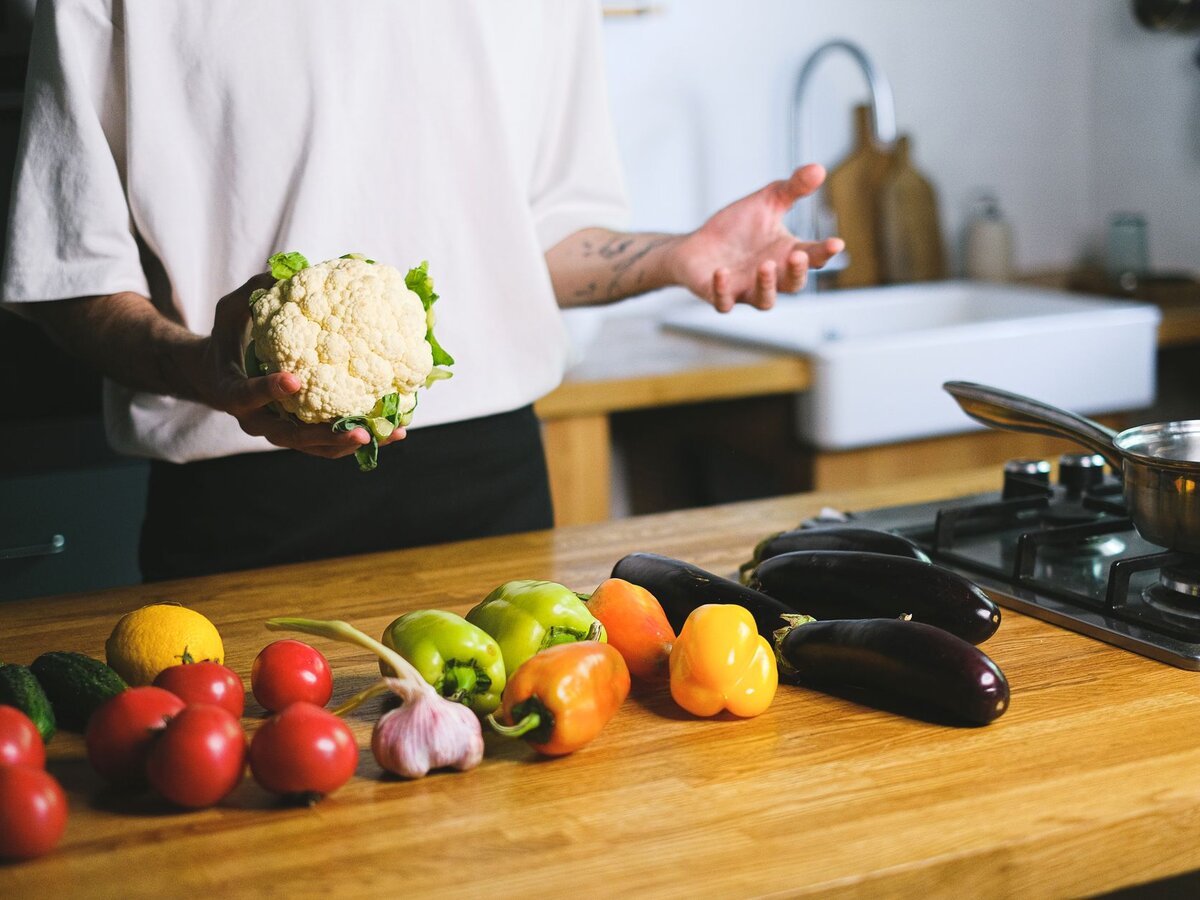
Priya, a 51-year-old school administrator in Cleveland, has tried three different diets in the last four years. Keto got her through a summer wedding but left her staring at a restaurant menu in October with nothing she wanted to eat. Mediterranean felt gentler, except she does not like olives and got tired of pretending she did. Intermittent fasting worked until a round of parent-teacher conferences had her skipping breakfast, then lunch, then eating a box of crackers in her car at three in the afternoon.
She told her sister about each one, and her sister had an opinion about each one. That is the problem Priya actually wanted to solve. Not the food itself, but the feeling that there was one right answer she kept missing.
Labels matter less than Tuesdays
Read any three popular eating plans side by side and the common threads are quieter than the labels. Whole foods show up everywhere. Vegetables and legumes form the base. Protein comes from plants or fish more often than from red meat. Alcohol is either absent or small. Sugar and refined grains are rare. The differences are real, and the overlap is larger.
Priya eventually saw that she did not need to pick a diet. She needed a default plate she could repeat on an ordinary Tuesday without thinking. So she built one.
A default plate that fits your life
Her breakfast is oats with walnuts and whatever fruit is on the counter. Lunch is a big salad with chicken or chickpeas, a hard-boiled egg when she has one, and a lemon-and-olive-oil dressing she makes once a week in a jar. Dinner rotates among salmon and roasted broccoli, tofu stir-fried with peppers and snap peas, or a lentil soup her mother taught her to make thirty years ago. She keeps frozen vegetables in the freezer for the nights she does not want to chop anything.
Nothing about this plate is revolutionary. That is the point. It hits the common threads from all those eating patterns without pledging allegiance to any of them. It leaves room for her sister’s casserole when they eat together, and it does not fall apart when she travels or stays late at work.
One swap to try this week
Most of us do not need a new diet. We need one small change we can see on the plate. Try adding a serving of vegetables to lunch, or trading a sugary afternoon snack for a handful of almonds and watching what happens to the week. Priya’s first swap was adding a handful of spinach to her lunch salad, which she had been making without any greens at all. It took ten seconds and changed nothing about her routine. She noticed she stayed full an hour longer, and the habit stuck because it was too small to argue with.
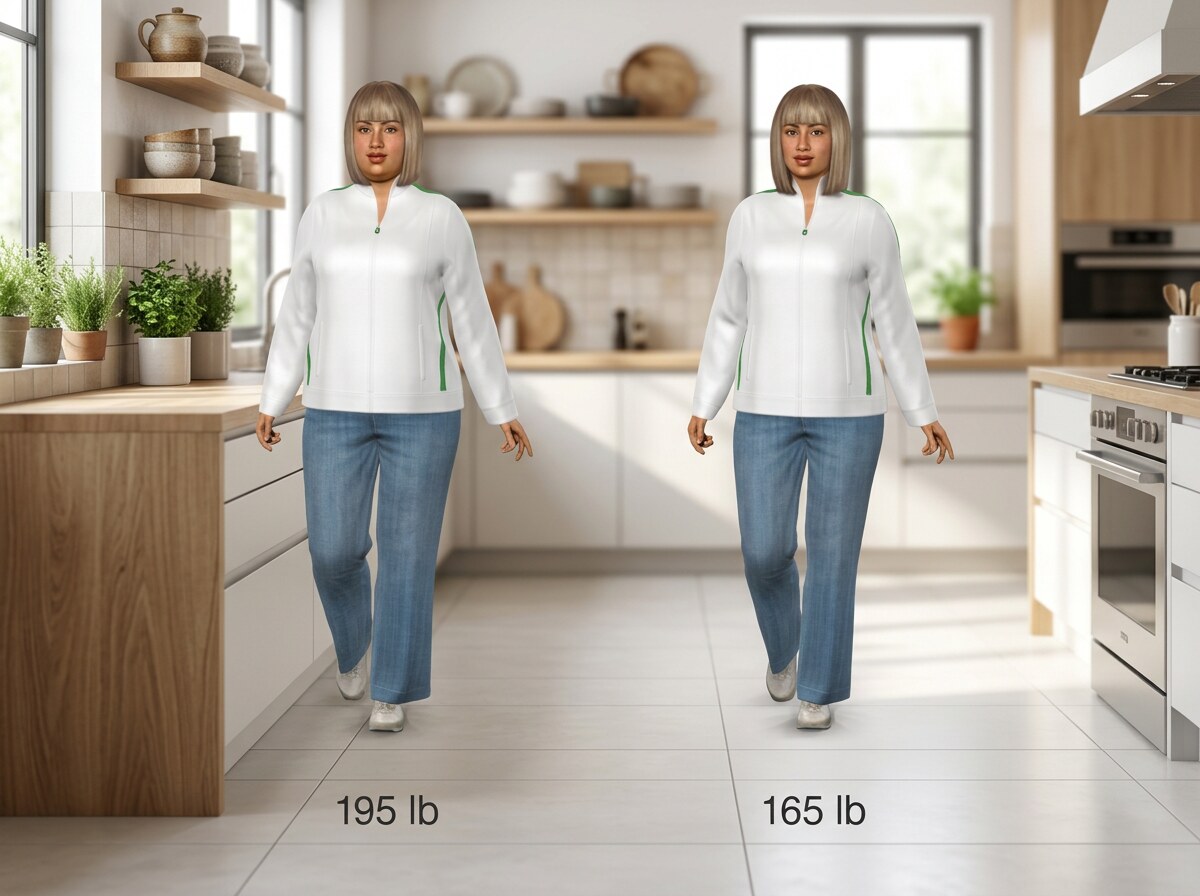
Look at the figure above. Priya started at 195 pounds and her goal is 165, a thirty-pound difference that changes the shape of her face, the line of her jaw, and the way her waist meets her hips. The first place she noticed the change was her cheeks. By the time she had lost fifteen pounds, the puffiness around her eyes was gone and her jaw had a definition she had not seen since her thirties.
The mirror told her a different story for months. She would look at herself and see the same person she had been at 195, even when the scale said 180. That is perceptual adaptation, and it is normal. The figure is more honest than your own eyes. If you want to see what thirty pounds actually looks like on a body shaped like yours, open the simulator and move the slider. The picture is more honest than the mirror.
Priya kept falling into a trap about identity. Keto made her a keto person for a while, and being a keto person meant she could not eat her mother’s lentil soup without feeling like she had failed. Mediterranean made her a person who was supposed to love olives, and she does not. Every diet came with a tribe and a set of rules, and the rules were what broke her.
Building a default plate instead of joining a tribe changed the question. The question is no longer “am I following the diet?” but “can I eat this on a Tuesday and feel good?” That is a question you answer with your own hunger and your own schedule, not with someone else’s food list.
Her sister still sends her articles about the latest study, and Priya still reads them. But she no longer feels like she is failing at someone else’s answer. She has her Tuesday plate, and it works.