
A $5,500 longevity panel won't tell you what a walk can
By Maya · October 14, 2026
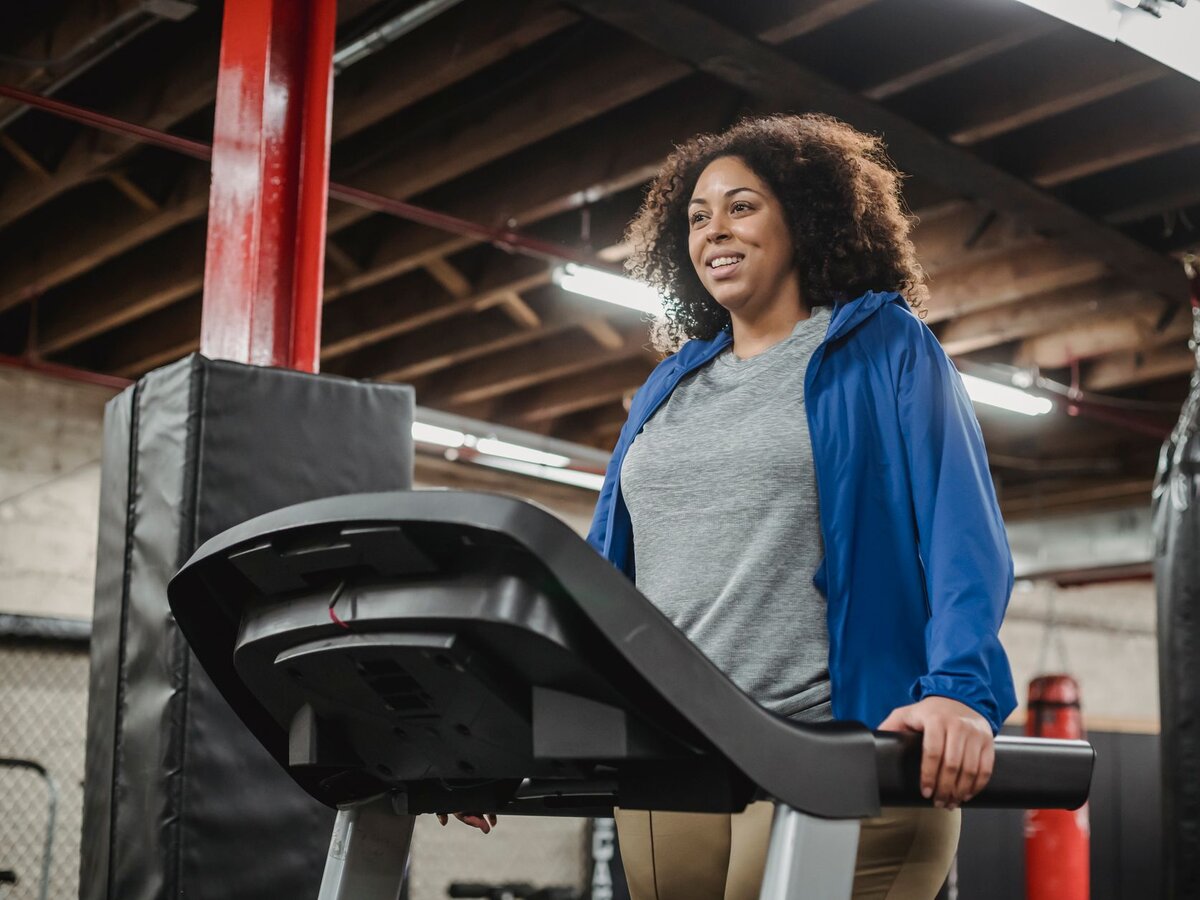
Priya is 61 and retired from a career in a hospital lab, which means she knows exactly how to read a test result and exactly how much a private clinic charges for one. When a longevity clinic opened twenty minutes from her house, she called for a price list. The basic package came to $5,500. It included a full-body scan, a battery of blood work, a VO2 max test, a resting metabolic rate measurement, and a consultation with a doctor who would explain what it all meant. She told her husband she was tempted. Then she did the math on what the doctor would likely tell her to do afterward, and spent the money on a walking pad and a set of adjustable dumbbells instead.
That was six months ago. Last week her primary care doctor looked at her chart and wrote a note that said, in its entirety, keep doing whatever you’re doing. Her resting heart rate is down from 74 to 66. She walks for 45 minutes most mornings, a little faster than she used to, and she lifts weights twice a week in her living room. Her sleep has settled into a rhythm. She still has most of the $5,500.
The longevity clinic is not a scam. The tests are real, the machines are impressive, and the doctors are sincere. But the advice at the end of that expensive consultation is almost always the same: move more, move faster sometimes, get stronger, eat mostly whole food, sleep on a schedule, and come back in a year to see how you did. You can hear that advice for free from your own doctor. The panel measures where you are. It does not do the walking for you.
The basics are boring for a reason
The things that keep a 61-year-old strong and mobile are not secrets. Walking is good for bones, joints, blood pressure, and mood. Lifting something heavy twice a week keeps muscle on a body that would otherwise lose it. A plate with mostly vegetables, some protein, and a reasonable amount of everything else is not a fad. Going to bed at the same time most nights makes the next day easier. None of this requires a scan to confirm.
Priya knew all of this before she called the clinic. What the clinic was really selling was certainty. A number for her biological age, a percentile for her fitness, a graph of her inflammation markers. But the number does not change what you need to do. It just tells you how far you have to go.
What six months of the free version looks like
Priya started at 178 pounds. Her goal is 152, which puts her back where she was before her last decade of desk work and stress eating caught up with her. She is not in a hurry. She walks at a brisk pace, around 3.2 miles per hour, and she adds a few minutes of faster walking in the middle when she feels good. She lifts weights twice a week, the same five movements, and she writes down how much she lifted so she can add a little next time.
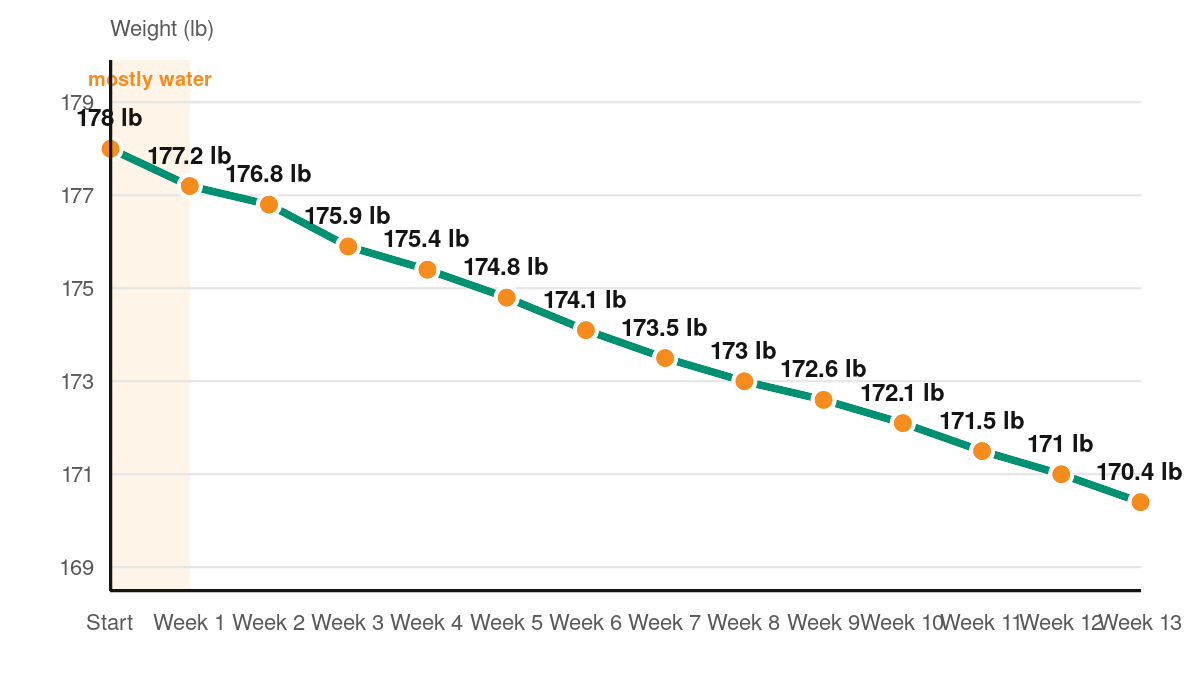
The graph below shows her first thirteen weeks. She lost a little over seven pounds in that stretch, which is a sensible rate. The first week dropped quickly, mostly water. After that it settled into a slow, steady line that dipped and flattened and dipped again. That is what the free version looks like. It is a Tuesday morning walk and a set of squats by the couch.
What the money bought instead
Priya spent about $600 on the walking pad and the dumbbells. She spent another hundred on a pair of walking shoes that actually fit. The rest of the $5,500 went into a savings account she has started calling the knee fund, because if she ever needs a new knee she would rather pay for it without arguing with an insurance company. She also bought a food log app subscription for the price of two lattes a month.
The food log turned out to be the thing she needed most. She had always assumed she ate pretty well. The log showed her that her portions had crept up over the years, and that she was eating a lot of her calories after dinner while watching television. She did not cut anything out. She just started eating a little less at dinner and having a bowl of frozen blueberries instead of crackers at nine o’clock. That change alone was worth more than any panel.
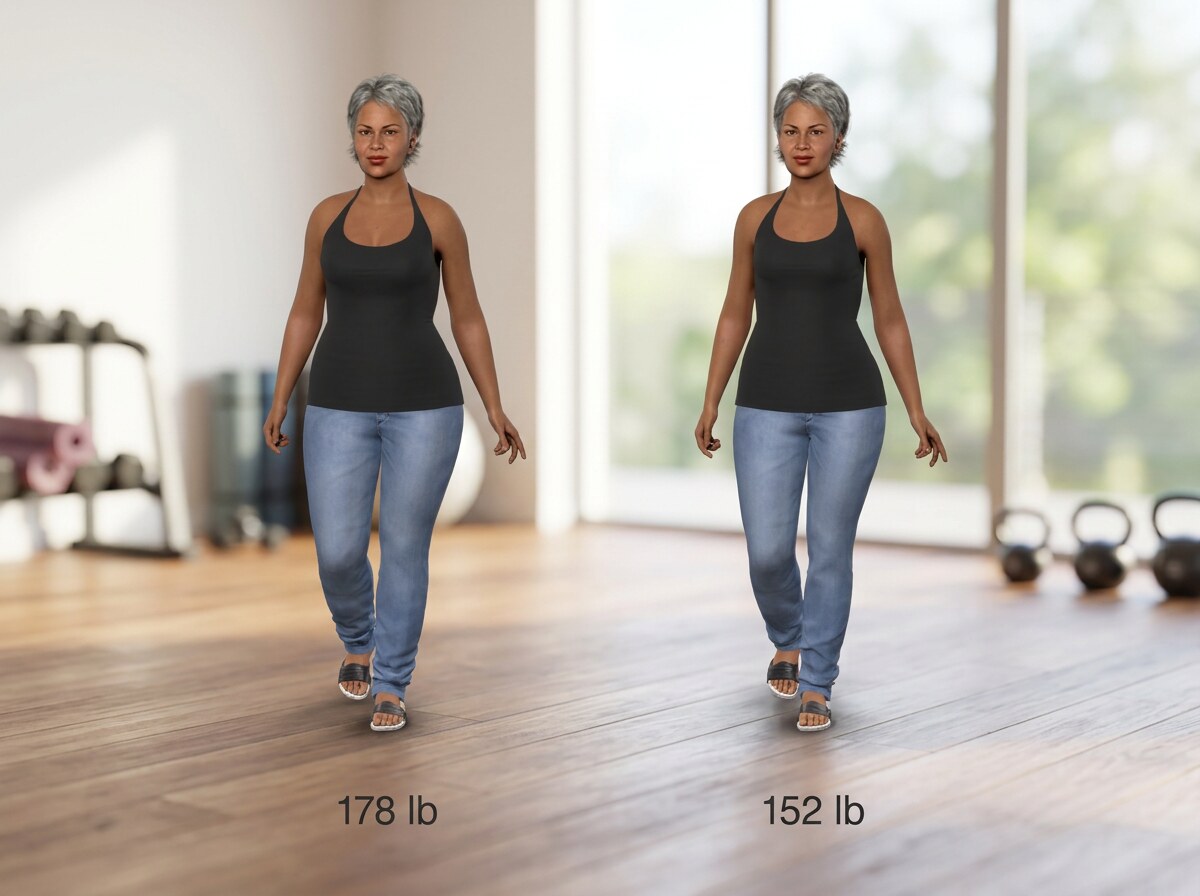
The figure above shows Priya at her starting weight of 178 and at her goal of 152. Twenty-six pounds is the difference between a waistband that digs in and one that sits comfortably. At 178 she carried the extra weight in her face and around her middle, the way most women in their sixties do. At 152 her jawline is sharper, her neck looks longer, and her waist is visible again under her shirt. The change is not dramatic from week to week. It is the kind of change you only see when you look at two pictures side by side, which is why the mirror lies to you every morning. If you want to see what your own goal looks like on a body like yours, try the simulator at /women.html.
The two-week test
Before you pay for a longevity panel, spend two weeks logging three things: your steps, your sleep, and your meals. Write them down in the app or in a notebook. Do not try to change anything yet. Just observe. At the end of two weeks, look at the log and find the one thing that is most obviously missing. For Priya it was the evening snacking and the fact that she was only getting six hours of sleep most nights. For you it might be that you walk less than you think, or that you have not lifted anything heavier than a grocery bag in years.
That missing thing is the thing to fix first. It will cost you nothing to fix it, or very little. The clinic will still be there next year if you want the panel. But by then you will already know what the panel would have told you, because you will have lived it.
There is a reason the clinic sells so well. You pay the money, you get the results, you sit in the consultation room, and you feel like a person who is taking their health seriously. That feeling is real. But it fades, and what is left is the same Wednesday morning where you have to choose between the walk and the couch.
The basics do not feel like much while you are doing them. A walk is just a walk. A food log is just a list. You will not get a certificate or a percentile. What you get is a body that works a little better every month, and a doctor who writes keep doing whatever you’re doing in your chart. Priya still has the clinic’s brochure on her kitchen counter. She uses it as a bookmark for her food log, and it reminds her that she already knows enough to get started.