
Your body ages in pieces, and you can slow the ones you use every day
By Maya · September 28, 2026
A body can be very old and very young at the same time. A 117-year-old’s cells showed extreme frailty in some systems and surprising protection in others. It is easy to hear a story like that and file it under genetics or luck. But aging does not work as a single switch. It involves a dozen systems moving at different speeds, and most of those speeds respond to what you do on an ordinary Tuesday.
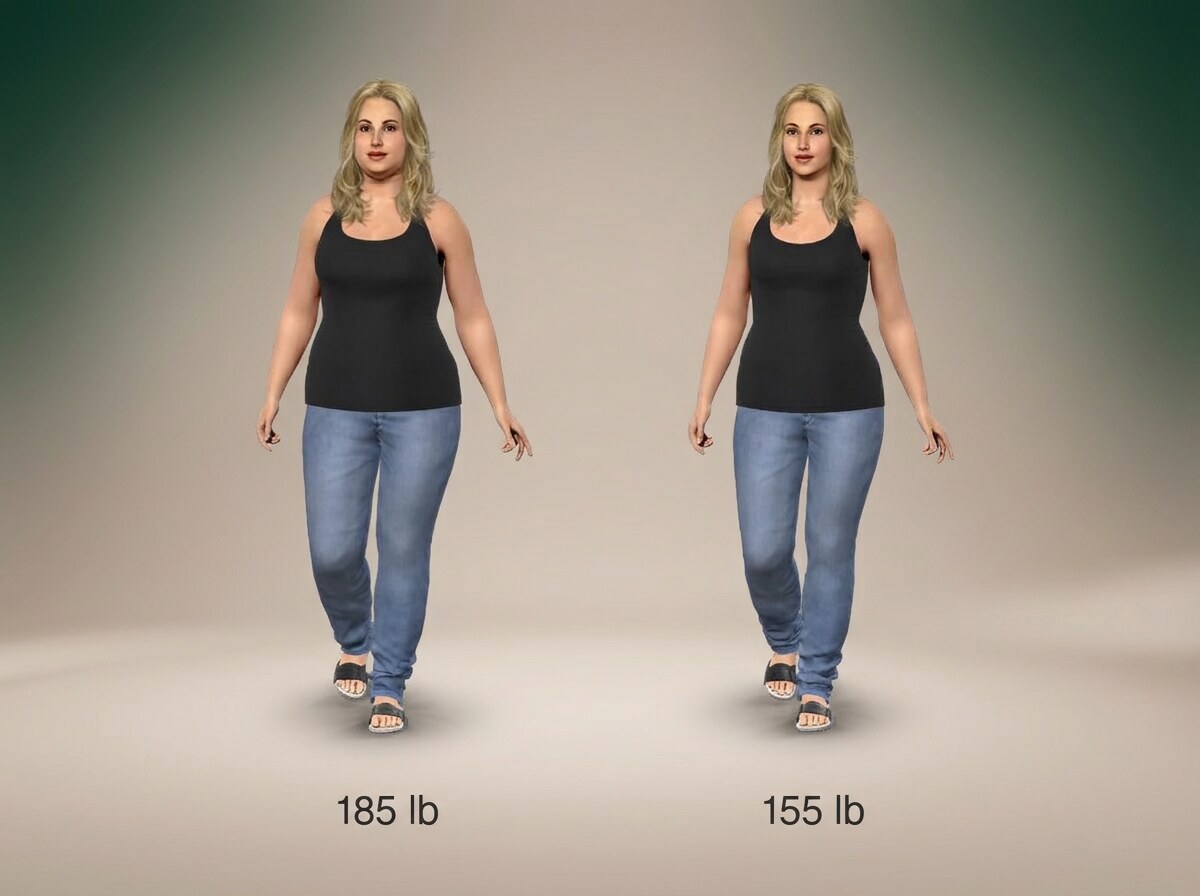
Priya is 44. She is fit in the way a lot of busy people are fit: she walks a few times a week, eats decent meals, and has not touched a dumbbell since high school. She sleeps about five hours a night because there is always one more thing to finish. She looks at older relatives and wonders which version of aging she is headed toward, so she decides to stop wondering and pick one system she can influence this month. The figure above shows where she is now and where she is aiming: 185 pounds down to 155, a slow thirty-pound shift over the next year. The graph below shows what the first four weeks actually looked like when she changed one thing at a time.
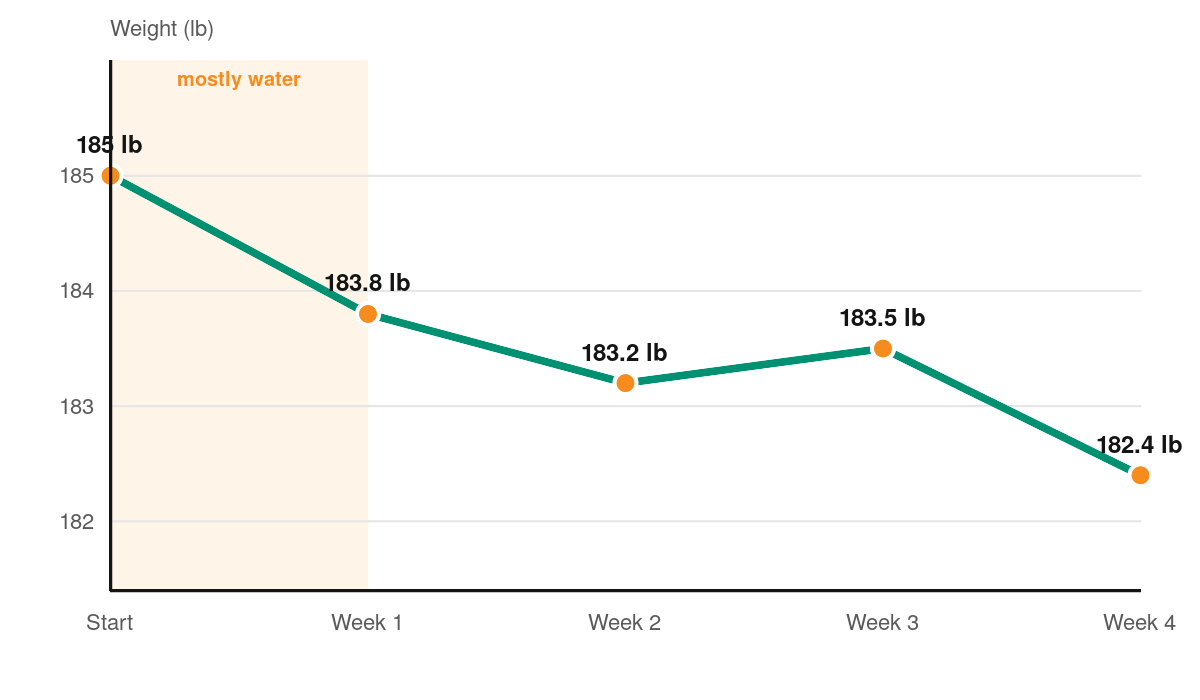
The first week she changed nothing except sleep. She got into bed an hour earlier, not to force eight hours, just to give her body a chance at seven. The scale dropped a little, which was mostly water and less late-night snacking. The second week she added two twenty-minute strength sessions with a pair of ten-pound dumbbells and a kitchen chair. The scale stalled, which she expected. By week four she was down a little over two pounds, but her sleep was steadier and her legs felt different on stairs. That is the honest shape of a first month: a small downward wiggle and a lot of invisible repair.
Thirty pounds on a 5’4” frame is the difference between a coat fitting through the shoulders and a coat fitting everywhere. Priya carries weight in her midsection first, so the first ten pounds will be subtle in her face and obvious in her waistband. The last ten will show in her arms and jawline. If you share that build, expect the mirror to lag the scale for a while, then catch up all at once. The figure above shows both versions side by side so you can see where the change lands on someone with her shape. You can adjust the model to your own height and starting weight with the women’s simulator, and looking once a month is usually enough to spot the real shift.
The reason Priya picked sleep first comes down to practicality. She could do it without adding anything to her day. A new gym routine is a decision you remake every time you go. An earlier bedtime is one decision you make at 10:30 and then stop making. For thirty days she treated sleep as the project and strength as the bonus. When the scale did not move in week three, she did not quit, because she was not measuring the project in pounds. She was measuring it in how many nights she got to bed before midnight.
You do not need to fix every system at once. You need to find the one system that is aging faster than the rest and slow it down. For some people that is blood sugar stability, which means walking after meals and cutting liquid sugar. For others it is muscle, which means lifting something heavy enough that the last few reps are hard. For Priya it was sleep and strength, because those were the two levers she had never pulled. The goal is to give yourself a better shot at seventy with the systems you use every day still working well enough to enjoy them.
Muscle is a system that responds at any age. A woman in her forties who has never lifted weights can still build meaningful strength, and that strength is what keeps her getting off the floor, carrying groceries, and catching herself when she trips. It also changes how her body looks, which is where the simulator helps. When Priya put her numbers into the app, she saw that losing thirty pounds without lifting would leave her smaller but softer. Losing the same thirty while lifting would keep more shape in her arms and legs. That visual difference convinced her to keep the dumbbells in the living room.
Sleep is the other lever. Five hours a night is common. Poor sleep can leave you reaching for sweets the next day. Tired people often eat more. Recovery from exercise feels slower too. Priya did not fix her sleep in a week. She fixed it in small increments: no phone in bed, a consistent alarm, one less episode of the show she was half-watching. By week four she was getting six and a half hours most nights, which is not perfect but is a lot better than five.
Blood sugar stability is the third system worth watching this decade. You do not need a continuous monitor to notice how you feel after a big bowl of pasta versus a plate with protein and vegetables. Walking for ten minutes after a meal is one of the simplest ways to keep the rise smaller, and it requires no equipment and no special food. Priya started doing this on the days she worked from home, and it took her about the length of one phone call.
You cannot control your parents’ genes. You can control how often you use your muscles, how many hours you give your brain to rest, and how steady you keep your blood sugar. Those systems change at different rates, and some of those rates you can influence. Priya is not aiming for 117. She is aiming for a version of 70 where carrying her own suitcase still sounds normal. That is a reasonable thing to build toward, one ordinary week at a time.
If you are not sure which system to pick, start with the one that feels most neglected. Maybe you have not lifted anything heavier than a laptop in years. Maybe the last time you woke up without an alarm is a distant memory. Some people get shaky and irritable between meals and know blood sugar is the right lever. One month of one change is enough to see a shift in the app, where the numbers and the picture move together.