
What walking 45 minutes a day actually does in 12 weeks
By Maya · September 13, 2026
Say you start at 190 pounds and decide to walk 45 minutes every day. You don’t change anything else for the first two weeks because you want to know what the walking does by itself. You lace up a pair of shoes that don’t hurt your heels and you head out the door.
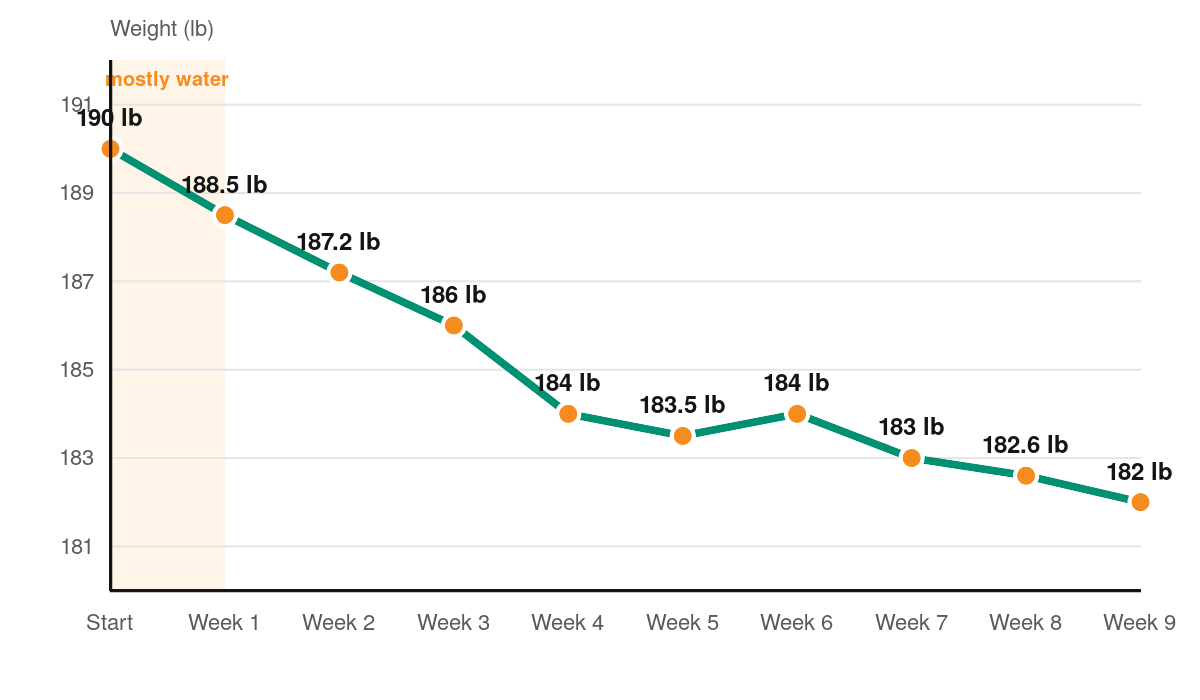
By the end of week one the scale might drop a pound and a half. That first drop is mostly water as your body adjusts to daily movement. By week four you’re down about four pounds. Your jeans fit a little looser at the waistband. The loss slows for most people after that. At twelve weeks you’re around 182 pounds. Eight pounds in three months is the kind of loss that sticks because nothing extreme was required to get there.
The graph below shows that timeline week by week. The line isn’t a straight drop. Some weeks you stay the same weight, and week seven actually ticks up half a pound because you ate a salty dinner the night before weigh-in. That’s normal. What matters is the direction over time.
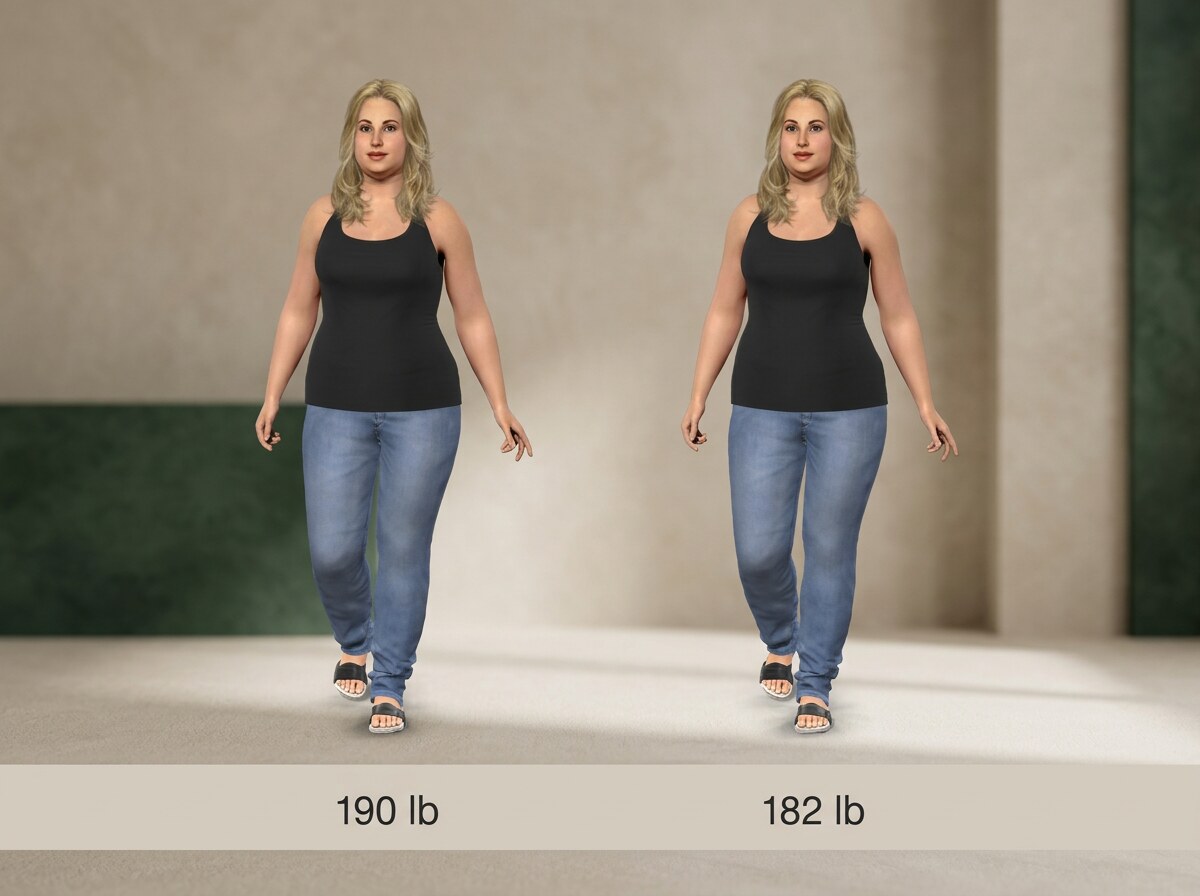
The figure above shows what eight pounds looks like on a 5’5” frame going from 190 to 182. The first place the change often shows up is the face. The jawline sharpens slightly and the cheeks lose a little fullness. The next area is the waist. At 5’5” and 190 pounds, a fair amount of weight sits around the midsection, and even a modest loss pulls an inch or so from the circumference. Your arms and thighs change last, which is frustrating because those are the places many of us watch most closely.
This is why the mirror and the scale disagree for weeks at a time. The scale reports total mass. The mirror sees distribution. The first week’s water loss doesn’t change the shape of anything. You look in the mirror at week three and see the same person. The scale says you’re lighter. Both are telling the truth, but they’re answering different questions. If you want to see what a given loss looks like on your own height and starting weight, you can try our simulator for women and slide between your current and goal weights.
Walking works for the same reason it’s hard to get excited about: nothing about it feels urgent. High-intensity programs give you a shot of accomplishment in week one. You’re sore and you’re sweating, and it feels like you’ve done something big. Walking doesn’t give you that. It becomes part of your afternoon or your morning, and by the time you’ve done it for a month you’ve stopped debating whether to go. You just go. The task is simple enough that your brain doesn’t put up a fight.
Walking is forgiving. If you miss a day, you walk the next day and nothing unravels. Over twelve weeks, the small daily action turns into a simple habit: you move every day because that’s just what you do now. When the routine is gentle, a plateau doesn’t feel like a crisis. You’ve invested effort, but not the kind that leaves you depleted and resentful. You can look at a week where nothing budged and keep walking instead of spiraling into what you need to cut or add. A plateau on a walking plan is often just water weight shifting, a salty meal, or your body taking a pause before the next drop.
If you want to add strength work later, a daily walk pairs well with two days a week of resistance training when you’re ready. Talk to your doctor if you have joint issues or heart concerns before you start any new routine.