The scale says you lost but the mirror says you gave something up
By Maya · September 18, 2026
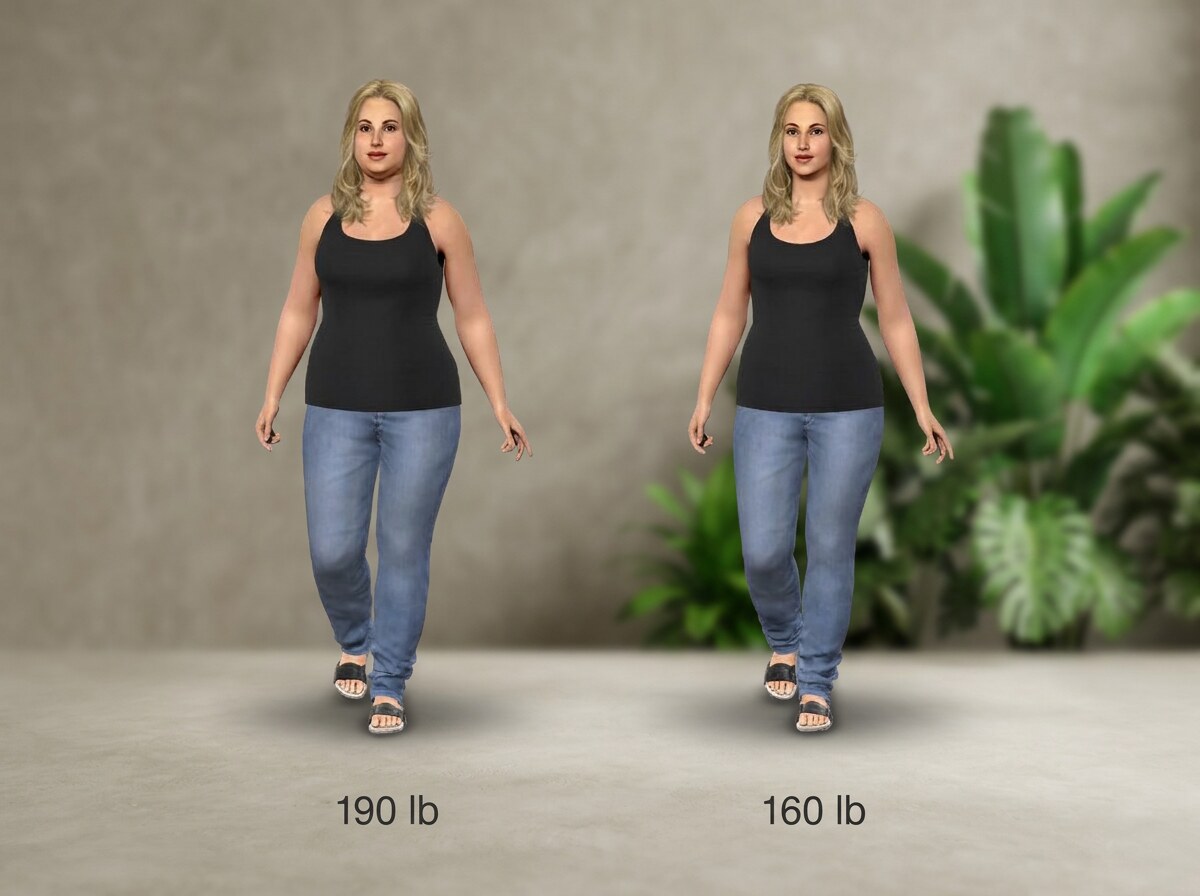
Say you start at 190 pounds, aiming for 160. You cut calories, the number on the scale ticks downward, and you feel that small rush of progress. Then you catch your reflection in a window and something looks off. You are smaller, but softer than you expected. Your arms look less defined, your waist has not tightened the way the math promised. What the scale will not tell you is that some of what you lost was never fat. It was muscle.
When weight comes off fast and without resistance training, the body breaks down muscle for energy alongside fat. A pound of muscle takes up less space than a pound of fat, so losing even a small amount makes a visible difference in tone. The figure above shows what a 30-pound loss can look like when muscle is preserved. The shoulders keep their shape, the waist narrows, and the whole frame looks tighter. When muscle goes, the same 30 pounds leaves a person looking smaller but less sculpted. Two people at the same weight can look completely different, and the difference is what they kept.
The first place muscle loss shows up is often the upper arms and the seat. The triceps lose their firmness and the backside loses its shape. The face thins too, but it can look drawn rather than defined. Fat loss with muscle retention carves the jawline and leaves the arms looking strong. The figure above gives you a way to see that difference before you live it. You can try the simulator with your own numbers to check what a gradual, muscle-sparing drop looks like on a body shaped like yours. The mirror is a lagging indicator, and by the time you notice softness creeping in, you have already lost tissue that is hard to rebuild.
Holding onto muscle during a diet requires two things most quick-fix plans skip. The first is enough protein. A common target is roughly 0.7 grams of protein per pound of body weight. For a 190-pound woman, that means about 130 grams a day. A chicken breast at lunch, a scoop of whey or a can of tuna in the afternoon, and a palm-sized portion of beef or fish at dinner gets you most of the way there. Greek yogurt, cottage cheese, and eggs fill the gaps. Make protein the centre of the plate and let carbs and fats fall in around it.
The second thing is resistance training. Two sessions of 30 to 45 minutes a week, hitting the major movements, signal your body to hold onto muscle while the calorie deficit does its work. Squats, deadlifts, and presses. Bodyweight versions count if you are new to it. The last few reps of each set should feel hard. Without that signal, the body sheds the expensive tissue first, and muscle is metabolically expensive. Talk to your doctor before starting a new routine if you have any joint concerns.
The mental side of this is trickier than the protein math. Quick-fix culture says weight loss should be fast and linear, and that any slowdown means you are doing it wrong. When you add strength training to a diet, the scale can stall for a week or two while you are still getting leaner. That stall stops more diets than you would expect. Expect it.
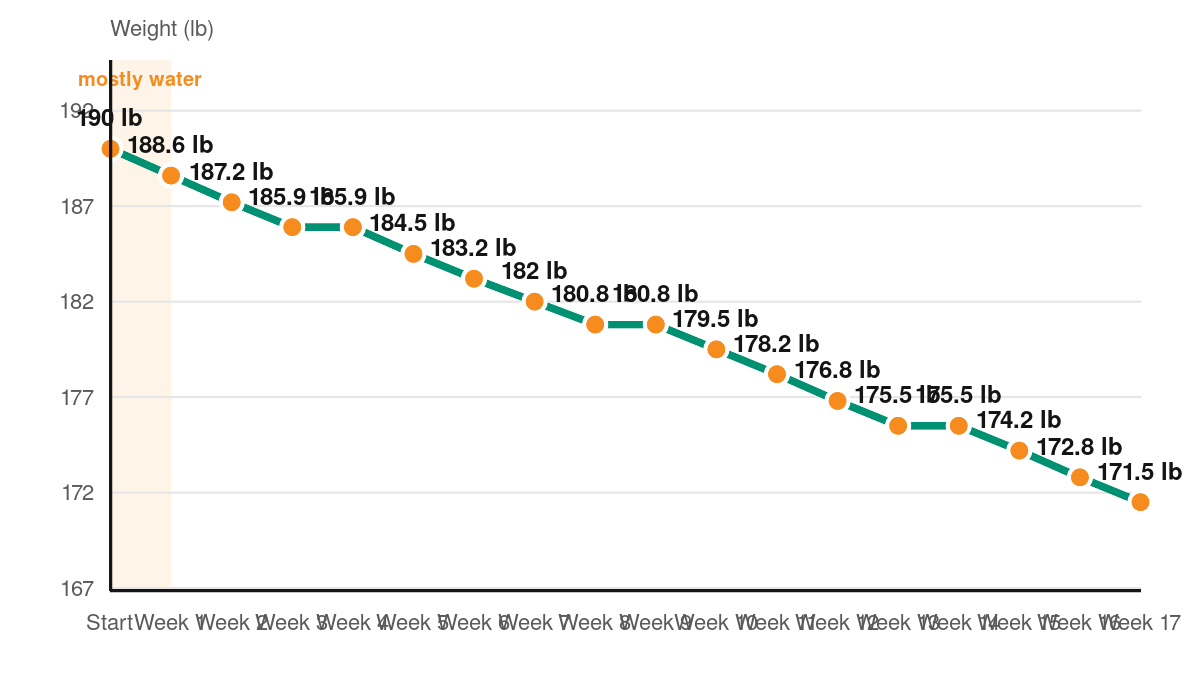
Water retention from new training can mask fat loss on the scale. Your measurements may change even when your weight does not. The graph below shows a realistic timeline for someone losing about a pound and a half a week while lifting twice a week and eating high protein. The line dips, levels off for a week, resumes, and levels off again. That pause is not a mistake—it is the body recomposing itself.
People keep going through those weeks by shifting what they track. The scale is one data point. How your jeans fit across the thighs is another. How many push-ups you can do and how your shoulders look in a tank top are two more. Those are the metrics that move when the scale does not, and they tell a more honest story about what you are building.
Muscle also makes daily movement easier now. Standing up from a chair without bracing your hands, carrying groceries up a flight of stairs, picking up a kid without wincing. When you diet that tissue away year after year, you enter middle age with less reserve than you could have had. Lean tissue is something you build through protein and resistance work and it serves you for decades through strength and mobility. The muscle you keep today is what lets you carry your groceries at seventy.
If you lost some muscle through past diets, you can get it back. Start with the protein target and those two lifting sessions a week. Give it six months. You may notice the difference in how you feel before you see it in how you look. Your reflection will show it.
If you want a way to visualize the change as you go, the Model My Diet app lets you adjust your body shape to match how your clothes fit, not just the scale. It is one more tool to keep your head straight when the scale stalls, and a good reminder that the number is not the whole picture.