
Protein enough is better than protein maximum
By Maya · September 25, 2026
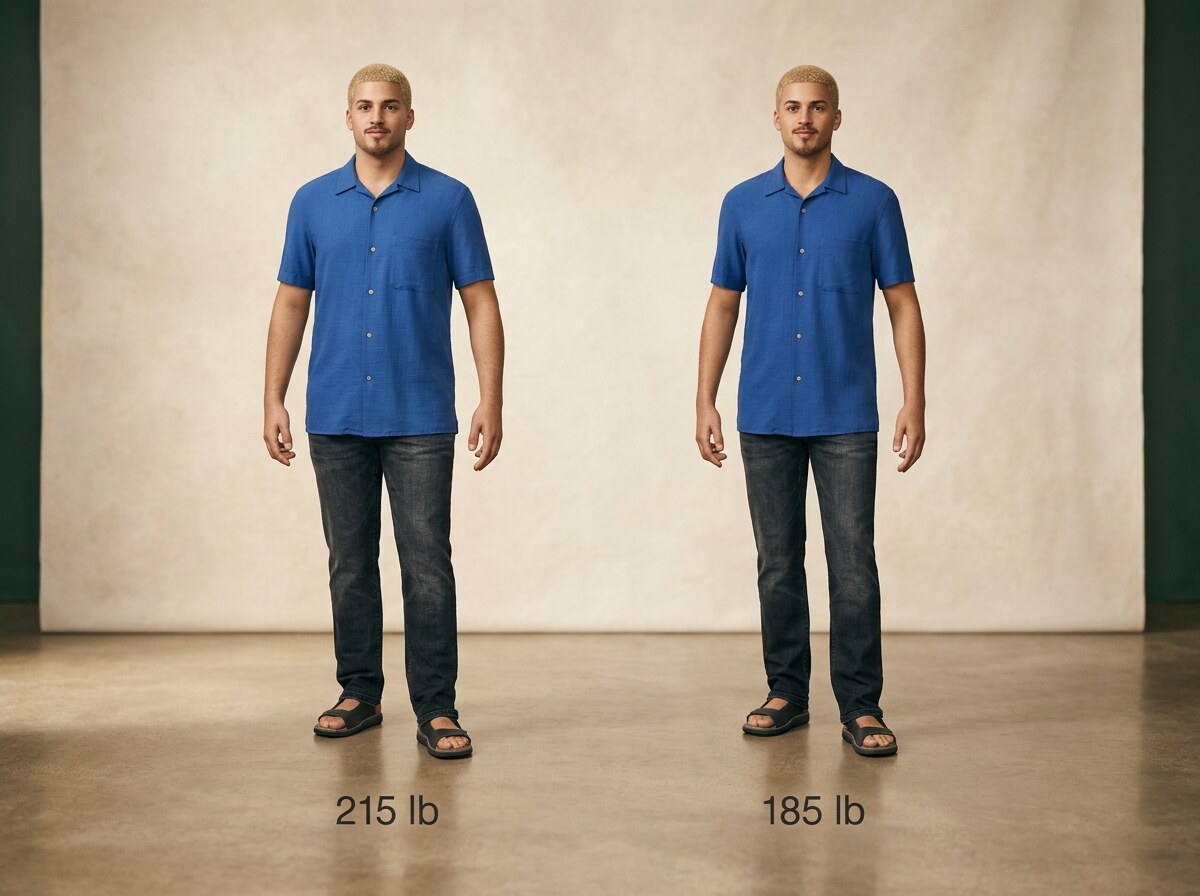
Marcus, 47, drinks three protein shakes a day and cannot do a single push-up. He started the shakes because a trainer told him he needed to maximize protein while dieting. Now he gets roughly two hundred grams a day, most of it from powder, and his weight has not moved in two months. He feels full all the time, but his pants fit the same and his upper body has never felt weaker.
Protein matters. But protein has become the answer to everything, and the word maximum has replaced the word enough. The target is not a number you chase at every meal. It is a sensible amount of protein, spread across the day, paired with two strength sessions a week.
Protein targets that work
A common target is roughly three-quarters to one gram of protein per pound of goal body weight. Marcus weighs 215 pounds and wants to get to 185. That means he needs somewhere around 140 to 185 grams a day. He has been eating more than that, and almost none of it has come from food he chews. The shakes have crowded out the meals that used to give him iron, fiber, and the kind of fullness that lasts.
Put a palm-sized portion of protein on the plate at each meal. For Marcus, that looks like three eggs at breakfast, a chicken thigh and a scoop of cottage cheese at lunch, and a piece of fish or a modest steak at dinner. That alone gets him to around a hundred grams. A cup of Greek yogurt or a handful of almonds in the afternoon brings him closer to 130. No shakes required.
The figure above shows Marcus at 215 pounds and again at 185, his goal. That thirty-pound difference is enough to change the shape of his face, the width of his waist, and the way his shirts sit across his shoulders. What the picture cannot show is the muscle underneath. If Marcus loses the weight without strength training and without enough protein, some of what disappears will be muscle. The person at 185 on the right could be softer and weaker than the person at 215 on the left.
Where weight shows first and last matters here too. Marcus carries most of his extra weight around his middle. That is also the last place it tends to leave. The first changes he will notice are in his face and his arms. His waist will catch up later. If you want to see what your own thirty-pound change looks like, you can try the simulator for men and compare your current weight to your goal.
Why the shakes do not help
A shake is fast and easy, and it disappears before your brain registers that you ate something. Marcus drinks one at 7 a.m., another at 3 p.m., and a third after dinner because he heard that is what you do. That is roughly 450 calories and 75 grams of protein before he has chewed a single meal. He still eats dinner. He still snacks. The shakes did not replace anything. They just added calories on top of an ordinary day.
That is the trap. For a lot of people, high-protein dieting is just a way to feel productive while adding calories they did not plan for. Marcus is not losing weight because he is eating more than he burns. The shakes make that easy. If he drops two of the three shakes and puts real food in their place, he will likely cut three or four hundred calories a day without trying.
Part of the appeal of high-protein dieting is that it feels like a rule you can win at. Three shakes a day is a streak. It gives you a number to hit before noon. But a streak that does not move you toward your goal is just a ritual, and rituals are hard to break because they feel like virtue. Marcus has been telling himself he is doing the right thing for months, and the scale has been telling him otherwise.
Losing fat and keeping muscle requires two habits that are less exciting than drinking a shake. The first is eating enough protein from food you actually chew. The second is lifting something heavy twice a week. Neither one comes in a tub with a scoop.
Strength sessions over shakes
Marcus has not lifted weights in years. He walks sometimes, but his upper body strength has faded. At 47, that is the thing he should be most worried about, far more than his protein count. Muscle is what keeps you able to stand up from the floor, carry groceries, and catch yourself when you trip.
Two strength sessions a week is enough for someone starting from zero. A simple routine of squats, push-ups against a counter or a bar, rows with a band, and a carry with a heavy bag will do more for Marcus than any shake. He will be sore the first week. The goal is not to exhaust himself. It is to tell his body, twice a week, that the muscle is still needed.
The mental shift here is from maximizing to maintaining. Maximizing feels urgent. It makes you think you are behind, that you need to catch up, that one missed shake is a failure. Maintaining feels slower, but it is the thing that actually works over decades. Marcus does not need to become a bodybuilder. He needs to become a man who can do a push-up at 47 and still do one years from now.
If Marcus expects the scale to drop two pounds a week while he builds muscle, he will be disappointed. Muscle is denser than fat and the scale can stall while the mirror changes. The graph below shows one possible path: by week twelve he is near 202, down about thirteen, with stalls along the way.
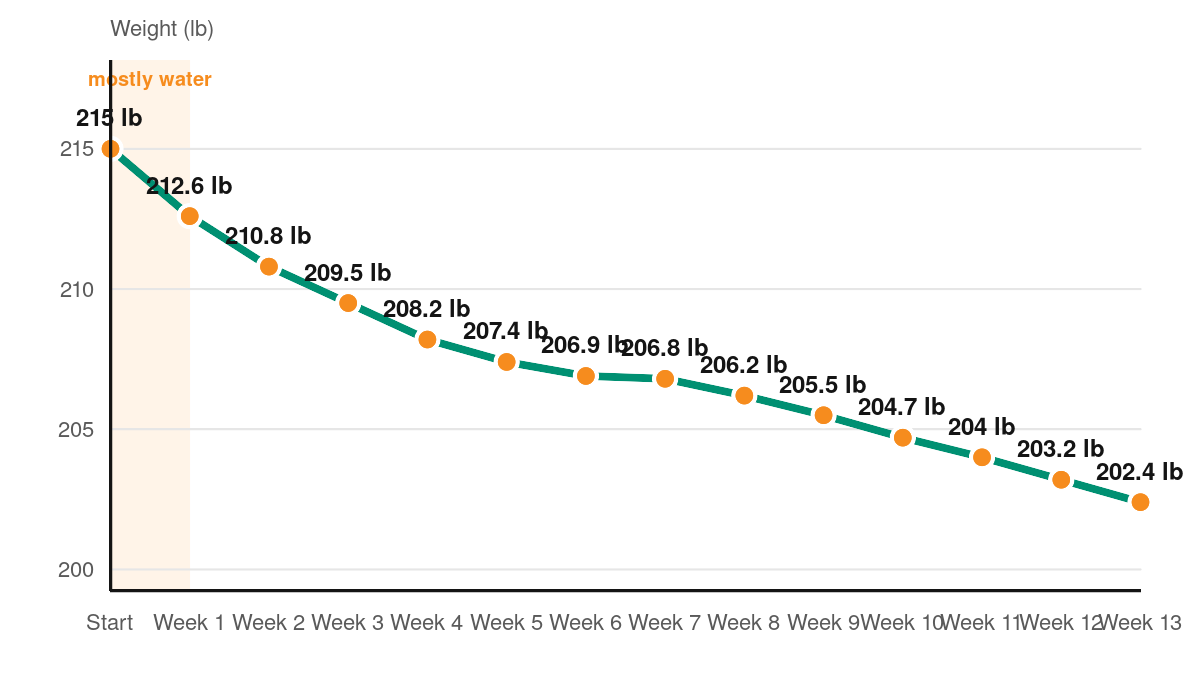
Marcus starts at 215 pounds. In the first two weeks he drops about four pounds, mostly water and less food in his stomach. Weeks three through six slow down as his body adjusts and he adds strength work. There is a week in the middle where the scale barely moves at all. The graph below shows that path, stalls and all.
Real food alternatives
A day of enough protein does not have to be complicated. Breakfast can be three eggs scrambled with spinach and a slice of toast. Lunch can be a big salad with chicken, chickpeas, and a hard-boiled egg. Dinner can be salmon, rice, and broccoli. If Marcus wants a snack, Greek yogurt with berries or a handful of almonds works. No powder, no bars, no engineered foods.
Whole foods bring things the shakes do not. Eggs have choline. Salmon has omega-3s. Beans have fiber. Cottage cheese has calcium. When you chase a single number, you stop thinking about the rest of the plate. The goal is to eat meals that keep you full, support your muscle, and leave room for a life.
At 47, Marcus has decades ahead of him. Staying strong through those years has more to do with keeping moving than with how much protein powder he bought. The choice is not between maximum protein and restriction. It is between sufficiency and strength, or a cupboard full of empty tubs.
If you want a way to see the difference twelve weeks can make, the app can show you what your goal weight looks like on your own body.
Talk to your doctor before starting a new eating or exercise plan, especially if you have any health conditions.