
Forget 10,000 steps. How fast can you walk?
By Maya · September 21, 2026
Say you park at the far end of the lot, pace during phone calls, and hit 8,000 steps by the time you brush your teeth at night. The number on your phone screen tells you that you moved. It does not say whether you moved hard enough to build strength you can feel. Walk up three flights of stairs with a bag of groceries and notice whether you are breathing hard at the top. Your pace tells you more than your step count does.
A step is a tap on a sensor. It says nothing about how much force you put into the ground or how hard your heart is working. Two people can both log 8,000 steps a day. One shuffles them out in slippers around the house, and the other walks with purpose, arms swinging, covering real ground. The number is the same but the effect on the body is different.
A slow, comfortable stroll settles your mind and keeps your joints moving. But it does not build the kind of capacity that keeps you moving well decades from now. Walking pace is a blunt measure of how much engine you have. If you can walk at three miles an hour but not three and a half, that half-mile-per-hour gap is the difference between crossing a wide intersection before the light changes and getting stranded in the middle.
The muscle power that drives a faster walk is the same power that catches you when you trip on a curb and gets you up from a low chair without using your hands. You lose that power slowly unless you give your body a reason to keep it. A step count, no matter how high, does not give your body that reason. Speed gives your body that reason.
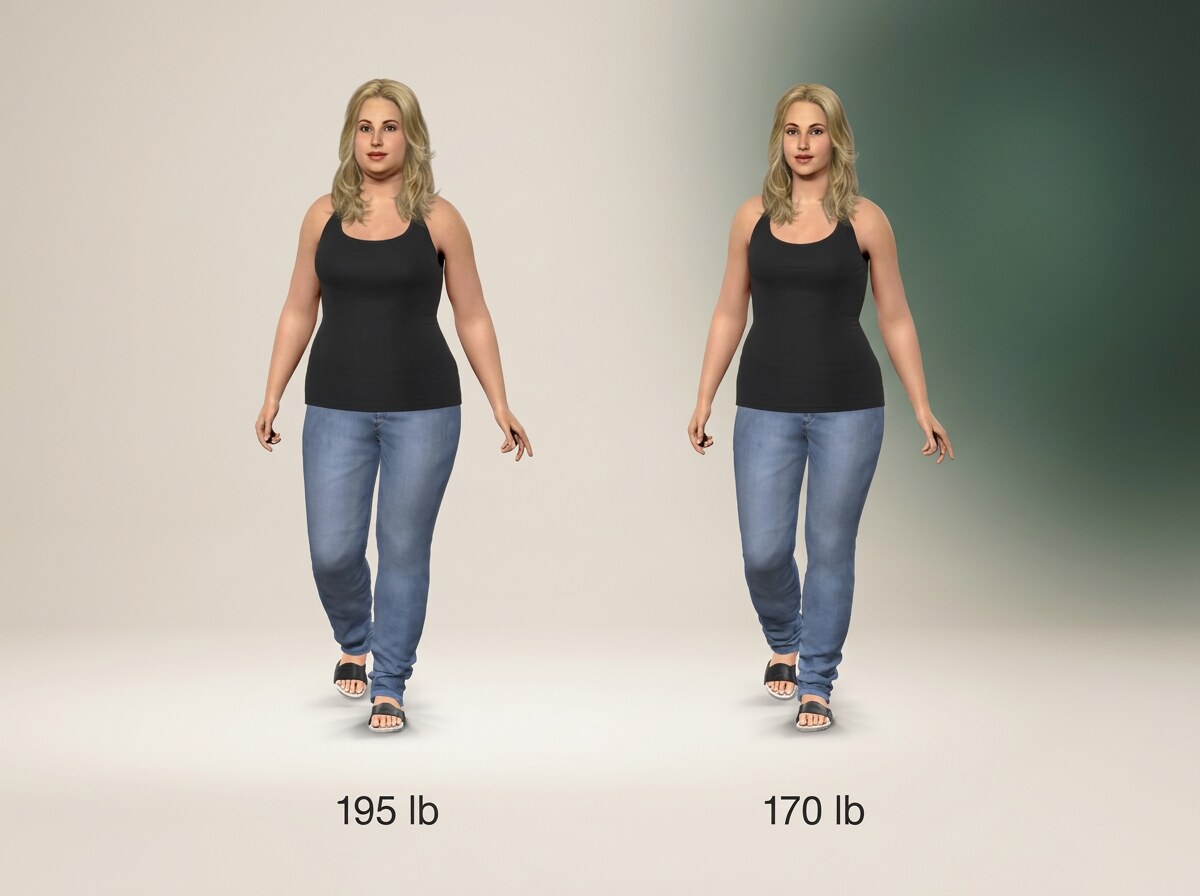
Imagine a woman who is five foot five and 195 pounds. She carries most of her extra weight around her middle. When she walks slowly, her stride is short and her hips barely extend. The movement looks careful, almost guarded. Now look at her at 170 pounds after months of brisk walking, in the figure above. The change shows first around her face and her waist, the places where weight often shifts earliest. Her whole frame looks more compact, and her posture opens up. You can try the same shift with the simulator for women. Move the slider twenty or thirty pounds and watch where the shape changes on a body like yours.
Chasing a step count feels productive because the number goes up. Speed asks for effort, and effort is uncomfortable for the first few minutes until your body warms up. Ten minutes fits into a morning. You can do ten minutes of brisk walking while the coffee brews or while you are on hold with the insurance company. Ten minutes at a pace where you can talk but cannot sing, and then you are done.
After a few weeks of that ten-minute habit, you may find yourself walking faster without thinking about it. Your regular walking gets a little quicker because your body has learned that faster is what feels natural now. You stop feeling like you are rushing. You just move differently.
The graph below follows our example figure over thirteen weeks. She added a brisk ten-minute walk to her day and kept everything else roughly the same. The line dips unevenly, with small stalls along the way. She might feel the change in her lungs before she sees it in the mirror.
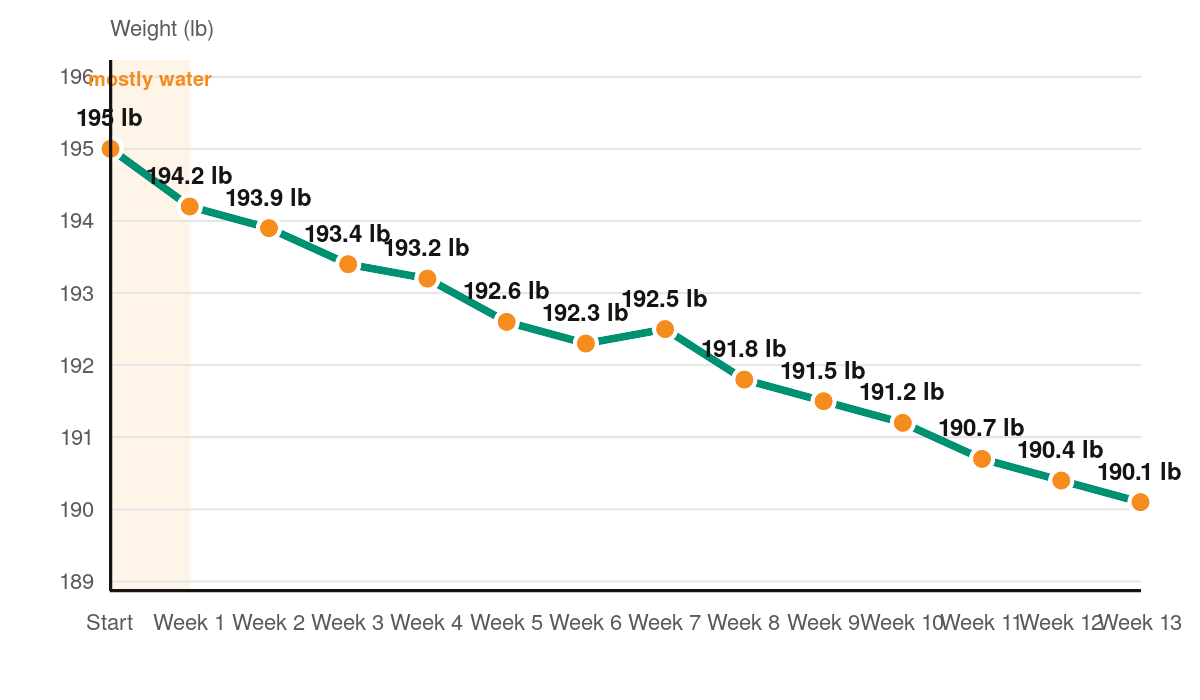
A step goal is a finish line you can hit every day. A pace goal is a feeling in your chest, and feelings are harder to check off. You might doubt whether you are going fast enough or whether ten minutes is enough to matter. The doubt is normal. The scale can echo that doubt for weeks, because the initial shift inside your body does not weigh much. Muscle adapts before fat moves, and muscle is dense. You are getting stronger while the number on the scale stays stubborn.
That gap between what you feel and what you see is why pace is a useful second signal. If your walking speed creeps up over a month, something real is changing even when the mirror has not caught up yet. Tracking that trend gives you a win you can claim before the scale gives you one. A win you can feel in your own breath keeps the habit alive through the weeks when the weight line goes sideways.
You do not need to overhaul your routine. You just need to take one walk you already do and do it faster for ten minutes. The same sidewalk and shoes. Just pick up the pace until your breathing deepens and you feel your arms start to drive the motion. That is the threshold where the work is happening.
Brisk is not a jog. It is the pace you would use if you were late for a bus that you could still catch. Your breathing deepens enough that you could speak a full sentence but would not want to hold a long conversation. If you wear a fitness tracker, you are aiming for roughly three to three and a half miles per hour for most people, but the breathing test is more reliable than a number on a screen.
Brisk walking scales to your fitness right now. If you are just starting out, brisk might be two and a half miles per hour. If you have been active for years, brisk might be four. The pace itself does not matter as much as the fact that you are working at the edge of your comfort zone. That edge is where you build capacity you can feel.
We track pace alongside weight in the app, if you want to watch the trend. The pace number might creep up before the scale number creeps down, and that is a useful early signal that your body is getting stronger.
Talk to your doctor before you push your pace if you have a heart condition or joint pain that worries you. Most people can start with five minutes and build from there.